My high school classroom, like my teaching, has undergone quite a few changes in the past few years. As I have incorporated aspects of flipped learning and passion-based learning into my curriculum, I needed a classroom space that would accommodate movement, choice, and self-directed learning. So, this summer I ditched my teacher's desk in favor of a standing work station, rearranged the desks into learning communities, added pillows, storage ottomans, and rugs for a more comfortable reading/break-out area, and made sure that students had easy access to what they would need to connect and collaborate in class by making supplies and multiple outlets accessible.

Showing posts with label Flipped Classroom. Show all posts
Showing posts with label Flipped Classroom. Show all posts
Monday, September 8, 2014


Thursday, June 26, 2014
Reflections on #FlipCon14

 I wasn't quite sure how to do that without running through my phone battery quickly, but I had another idea. What about a collaborative Google Doc of session notes? And rather than just me sharing my notes from each session, I asked the community of educators attending FlipCon14 both in person and virtually to help me. I tweeted out a link to my open Google doc, requesting help building a collaborative session notes for the presentations given at the conference. What I didn't expect was just how many people were interested in helping build our digital conference resource.
 |
| ELA Flippers - Cheryl Morris, Andrew Thomasson, Kate Baker, Beth Oing, and others |
 |
| Jon Bergmann and Aaron Sams sharing stories |
 |
| Jason Bretzmann leads a fantastic panel discussion |
 |
| FlipCon14 = Selfie Bingo. Here's a selfie with Kate Baker |
Wednesday, June 11, 2014
Principles of Flipped Learning
I had an opportunity to connect with teachers at the William Penn Charter School today interested in learning more about the flipped learning approach to teaching. As I shared the explore - flip - apply model that I use most often in my own high school English classroom, I was reminded of just how similar this approach to teaching is to the inquiry and experiential-based models of education that have come before. Both of these pedagogies place student learning at their center, and like these previous models, the flipped approach encourages flexibility, choice, autonomy, and opportunities to master content and demonstrate skill development.
Interested in learning more? Check out this introduction to flipped learning. You'll find a planning sheet linked in this presentation to help you design your first flipped lesson.
Interested in learning more? Check out this introduction to flipped learning. You'll find a planning sheet linked in this presentation to help you design your first flipped lesson.
Tuesday, May 13, 2014
Confessions of a Failed Flipper
As I shared in my earlier post, I learned most of what I know today about the flipped learning approach from the disaster that was my first year flipping my tenth grade English classes. I'm over-selling it, but not by much. Here, take a peek:
Introduction to The Kite Runner
What student is going to spend 40 minutes watching a Prezi on the introduction to Afghani history? I created it, and I don't want to watch it all the way through! It took my failed first year of flipping to learn what works and what doesn't when flipping my high school English classes. Over the course the last year, I have both failed and found success with the flipped learning approach, and I have learned a great deal from both. But today, learn from my mistakes. So here it is - my confessions of failed flipping:
My first semester of more intentionally using the flipped/blended approach had me sitting in front of my computer screen creating more and more presentations to screencast. And this is not ordinarily how I teach. I don't usually use a lot of PowerPoints or Prezis. Yet, I created presentation after presentation, sitting hour after hour, sometimes into the wee hours of the morning recording videos on assignment instructions, grammar mistakes, and historical connections to our class novels. And I thought I was being smart about it, asking students to use the videos to complete questions on worksheets. Occassionally, I would sneak an extra credit opportunity into the video. I would be surprised the next day when only two or three students would come in with the extra credit. But the videos were 15, 20, sometimes 30 minutes long. And they were bad. Really, really bad. I was asking students essentially to watch PowerPoints, videos without movement, without activitiy, without my personality. When I recorded many of my first videos, I did not use my webcam. My weird stories and quirkiness were absent. I was asking my students to watch the least interesting content of our class while I presented it in the least interesting way. Of course they didn't watch the videos!
It was when I attended EdCamp Philly last May that the absurdity of what I was doing hit me. In a session titled "Classroom Gymnastics: Flipping, BYOD, Paperless, 20% Time, and More," teachers Liz Calderwood, Kate Baker, Marc Seigel, and Christina Roy began a conversation with participating educators about the differences between the flipped and blended approaches to teaching as well as about how they planned and prepared the flipped elements of their courses. It wasn't about the videos. It was about the inquiry.
Flipped learning isn't about the videos. Instead, it is a model of teaching that is based on inquiry and exploration. Rather than the teacher establishing what, when, how, and why students learn the content, the flipped approach encourages teachers to rethink how and when learning happens for our students. How might we better engage our learners in their learning? In what ways can we encourage student ownership and mastery over our content areas. And so flipped learning begins with a problem. What is the driving problem or question that will lead my students to explore a particular element of my content area? How can I encourage my students to explore, to be self-directed learners? As their teacher, I am the facilitator of exploration (oh, I like that title. I might just need to start referring to myself as a Facilitator of Writing Exploration). And so now what I flip are those materials that will encourage my students to explore on their own. Sometimes my flip comes in the form of a shared Google Doc that I ask my students to collaboratively annotate. Sometimes flipping in my classroom looks like a traditional English classroom with my students reading at home. Sometimes flipping does involve videos. However, my more recent videos focus on skills, with me screencasting an example essay to briefly show students about a particular element of the craft of writing. I am working to build a library of these writing craft videos, short five minute videos that I can share on an as-needed basis to help differentiate my writing instruction. I ask students to come to class the next day with questions based on whatever it is that I have asked them to complete outside of class. My class is based on questions. And it is the questions that we use to explore, to discuss, to debate, to learn. Not the videos.
My first classroom website back in 2002 was a very large collection of hyperlinks that very few students accessed with any regularity. In 2008, I played around with wikis and eventually moved my class site over to a Ning, which at the time was free for educators. This is the space that I use today with my students. Students contribute to our online classroom through blogs and discussion forums. Students can form online groups with their own discussion threads. Students post pictures and videos and comment on one another's work. It is a space where I not only post our weekly assignments but where students also add to our learning. Our online space has purpose. It also has audience. And because students know that they writing that they post in our online space will be read by more than just the teacher, students have a purpose for their contribution and revision of their written work.
But what I have also learned from our online space is that you need to keep your content as few clicks away as possible. Asking students to "go here, click on this, find the menu at the left and click on the second option" is a recipe for disaster. You will lost a majority of your students by the second click. Your online materials need to be well-curated and as few clicks away as possible. I caught a presentation by Philip Vinogradov recently where he talked about his use of gamification concepts in teaching. His model of first curating all of his lesson and enrichment materials into one online space before ever sharing units with students makes sense. Curating lesson materials allows for students to move at their own pace and encourages mastery in that students can return to a library of online learning resources as they need. What this also calls for is planning. Success with the flipped learning model begins with excellent planning. You need to anticipate what remedial and enrichment materials you will need in addition to your planned lesson materials, you need to create a purposeful online space that students can connect and contribute to, and you need to have the end in mind. How will you know students have mastered the objectives of your lesson? When they have viewed all your materials? Or instead, will students demonstrate their mastery through their contributions?
 One of my greatest successes with the flipped approach came this past fall as my students completed our first 20% time research projects. But if you walked into my classroom on any Friday, it would look more than just a little chaotic. I would have a student or two crouched under the counters lining my room reading a book. Another two or three students could be found in the hallway video taping interviews. Three of four students would be hovering over the computer using my webcam. Desks would be rearranged into small pods for students to watch YouTube tutorials on cake decorating and computer hardware assembly. But learning was happening in every corner of our room. On our research days, I circulated around the class conducting conferences, speaking with students about their learning process, intervening when students needed support. However, what was not successful was how I kept track of our writing and research conferences...or rather, how I did not keep track of them.
Looking back, I should have more carefully read the advice of Nancie Atwell and Carl Anderson, both of whom advocate for students and teacher to keep process notes of their writing conferences together. Although my students blogged weekly and I kept an unmanagably large spreadsheet of all our varied projects, I didn't track the conversations and strategies I shared with students during our conference times. This was a lost opportunity. Looking back, I could have intervened more strategically had I been taking notes on our conferences. This would also have helped me be more strategic in how and when I provided feedback.
 Not only does the model of flipped learning hinge on the questions that we use to frame the lessons we prepare for our students, but we also need to be asking our own questions. Is this the best way to support the learners in my courses? Are my students getter the feedback they need to progress? How the heck do I do this when no one else in my department is?
The flipped learning movement took root in the work of Aaron Sams and Jon Bergmann who began flipping their Colorado science classes in order to reach those students missing class. Five years later, you can't attend an educational conference without there being at least one session on flipped learning. As of today, there are 19,632 members of the Flipped Learning Network. What does this mean? There are a lot of mentors and models out there to ask for help. Something that I have started to do a bit better this year is turn to my Twitter PLN with questions about flipping. English teachers like Cheryl Morris and Andrew Thomasson, Kate Baker, and Troy Cockrum have been invaluable inspirations for my own learning. Had I reached out earlier in my flipping adventures, perhaps I would not have made the mistakes that I did. So in addition to curating materials for your students, curate your own learning spaces and mentors. Reach out and ask questions. Ask a lot of questions. After all, isn't that what we're trying to encourage our students to do? We need to be models for the type of learning we hope to support.
Here are a few of the online spaces where I have found models to inspire my flipped learning approach for my English courses. Let me know if you find any that I can add!
Follow Jennifer's board Flipped Learning Tools for the High School English Classroom on Pinterest.
Introduction to The Kite Runner
What student is going to spend 40 minutes watching a Prezi on the introduction to Afghani history? I created it, and I don't want to watch it all the way through! It took my failed first year of flipping to learn what works and what doesn't when flipping my high school English classes. Over the course the last year, I have both failed and found success with the flipped learning approach, and I have learned a great deal from both. But today, learn from my mistakes. So here it is - my confessions of failed flipping:
1) It's Not About the Videos
I thought it was about the videos. It is not about the videos. In fact, it's really, really, really not about the videos. I have been live streaming my English classes since 2009, opening up access to absent students and parents so that they might join us virtually for class. So when I started to hear more about "flipping your class," it made sense to me. I am a firm believer in the power of transparency, in the power of opening up opportunities for students to engage in learning when and wherever they can. And, since I was already recording my classes, this flip wouldn't be so hard, right? Wrong.My first semester of more intentionally using the flipped/blended approach had me sitting in front of my computer screen creating more and more presentations to screencast. And this is not ordinarily how I teach. I don't usually use a lot of PowerPoints or Prezis. Yet, I created presentation after presentation, sitting hour after hour, sometimes into the wee hours of the morning recording videos on assignment instructions, grammar mistakes, and historical connections to our class novels. And I thought I was being smart about it, asking students to use the videos to complete questions on worksheets. Occassionally, I would sneak an extra credit opportunity into the video. I would be surprised the next day when only two or three students would come in with the extra credit. But the videos were 15, 20, sometimes 30 minutes long. And they were bad. Really, really bad. I was asking students essentially to watch PowerPoints, videos without movement, without activitiy, without my personality. When I recorded many of my first videos, I did not use my webcam. My weird stories and quirkiness were absent. I was asking my students to watch the least interesting content of our class while I presented it in the least interesting way. Of course they didn't watch the videos!
It was when I attended EdCamp Philly last May that the absurdity of what I was doing hit me. In a session titled "Classroom Gymnastics: Flipping, BYOD, Paperless, 20% Time, and More," teachers Liz Calderwood, Kate Baker, Marc Seigel, and Christina Roy began a conversation with participating educators about the differences between the flipped and blended approaches to teaching as well as about how they planned and prepared the flipped elements of their courses. It wasn't about the videos. It was about the inquiry.
 |
| From Pearson |
2) If You Build It, They Might Come...But They Might Not
Just because you've posted your assignments online does not mean that students will access them online. By now, most teachers realize this. If there is not a clear purpose for students to access all those assignments and videos you've spent hours uploading, they won't. A teacher's online space should not just be the equivalent of a classroom bulletin board. It should not be passive. Our online spaces must be dynamic, engaging, changing as the learning happening in our physical classrooms changes. Students need to contribute to the learning that happens in our online spaces. |
| My class Ning site at MsWard.org |
But what I have also learned from our online space is that you need to keep your content as few clicks away as possible. Asking students to "go here, click on this, find the menu at the left and click on the second option" is a recipe for disaster. You will lost a majority of your students by the second click. Your online materials need to be well-curated and as few clicks away as possible. I caught a presentation by Philip Vinogradov recently where he talked about his use of gamification concepts in teaching. His model of first curating all of his lesson and enrichment materials into one online space before ever sharing units with students makes sense. Curating lesson materials allows for students to move at their own pace and encourages mastery in that students can return to a library of online learning resources as they need. What this also calls for is planning. Success with the flipped learning model begins with excellent planning. You need to anticipate what remedial and enrichment materials you will need in addition to your planned lesson materials, you need to create a purposeful online space that students can connect and contribute to, and you need to have the end in mind. How will you know students have mastered the objectives of your lesson? When they have viewed all your materials? Or instead, will students demonstrate their mastery through their contributions?
3) Prepare for Chaos
One of the many reasons I initially wanted to move to a flipped approach was to open up more time in class for my students to practice their reading and writing skills with the support of both the teacher and their peers. It didn't make sense that for me to assign reading homework when students were struggling with comprehension. It didn't make sense to have students draft essays outside of class when they struggled to formulate ideas into a thesis. The activities that my students struggled with needed to be the ones we practiced together in the physical clasroom. Moving more of the reading and writing into our classroom time together using a writing workshop model made it easier for me to differentiate how and where I provided support. What it also made for was a lot of chaos.Looking back, I should have more carefully read the advice of Nancie Atwell and Carl Anderson, both of whom advocate for students and teacher to keep process notes of their writing conferences together. Although my students blogged weekly and I kept an unmanagably large spreadsheet of all our varied projects, I didn't track the conversations and strategies I shared with students during our conference times. This was a lost opportunity. Looking back, I could have intervened more strategically had I been taking notes on our conferences. This would also have helped me be more strategic in how and when I provided feedback.
4) Ask Questions...Lots of Questions
The flipped learning movement took root in the work of Aaron Sams and Jon Bergmann who began flipping their Colorado science classes in order to reach those students missing class. Five years later, you can't attend an educational conference without there being at least one session on flipped learning. As of today, there are 19,632 members of the Flipped Learning Network. What does this mean? There are a lot of mentors and models out there to ask for help. Something that I have started to do a bit better this year is turn to my Twitter PLN with questions about flipping. English teachers like Cheryl Morris and Andrew Thomasson, Kate Baker, and Troy Cockrum have been invaluable inspirations for my own learning. Had I reached out earlier in my flipping adventures, perhaps I would not have made the mistakes that I did. So in addition to curating materials for your students, curate your own learning spaces and mentors. Reach out and ask questions. Ask a lot of questions. After all, isn't that what we're trying to encourage our students to do? We need to be models for the type of learning we hope to support.
Here are a few of the online spaces where I have found models to inspire my flipped learning approach for my English courses. Let me know if you find any that I can add!
Follow Jennifer's board Flipped Learning Tools for the High School English Classroom on Pinterest.
Sunday, May 11, 2014
Resources for Flipping the English Class
On Friday afternoon, I had the opportunity to join both lower and upper school teachers from Penn Charter School in Philadelphia to discuss the flipped learning model. Many of the teachers were familiar with the term flipped learning, but had questions about what the approach looked like in a humanities classroom. Isn't the flipped model something that English and history teachers already do? And the answer is...sort of.
Flipped learning is not just about students watching videos as homework. Instead, the flipped approach is very similar to inquiry-based and problem-based learning pedagogies in that at the heart of the flipped approach are students. This students-centered learning approach allows for student exploration of concepts with opportunities to practice and master skills using teacher created and curated materials that students have access to both inside and outside of the classroom. Teachers act as facilitators, mentors, and coaches, helping guide students through these learning opportunities. What this means for me as a high school English teacher is that I use a great deal of formative assessment in order to determine what skills and higher order learning activities my students are struggling to learn. These are the learning opportunities that should happen with my support inside the classroom. As an English teacher, I had previously assigned my students chapter-by-chapter reading homework. However, if my students are struggling with reading comprehension, this "homework" is doing more to hinder their learning than to support it. The same is true of teaching writing. Previously, I expected my high school students to draft their essays outside of class. But this didn't make sense when my students were struggling to compose their thesis statements. The skills that students struggle with need to be flipped into the classroom. Now, we begin all of our writing activities in the classroom where students have support from both their teacher as well as from their peers.
For those new to the idea of flipping the English classroom, I wanted to take a moment to share some of the resources that I have found helpful in my flipping adventures. I am by no means an expert, and as I shared with the teachers at Penn Charter on Friday, most of my learning about this approach happened as I did everything exactly wrong. Imagine students sitting at home watching 25 minute long videos on sentence fragments. Yikes! So to help other teachers avoid my mistakes (and wasted time creating truly awful videos), I've compiled some of my favorite tools.
 |
| Image from WGBY Education |
For those new to the idea of flipping the English classroom, I wanted to take a moment to share some of the resources that I have found helpful in my flipping adventures. I am by no means an expert, and as I shared with the teachers at Penn Charter on Friday, most of my learning about this approach happened as I did everything exactly wrong. Imagine students sitting at home watching 25 minute long videos on sentence fragments. Yikes! So to help other teachers avoid my mistakes (and wasted time creating truly awful videos), I've compiled some of my favorite tools.
Getting started:
 |
| Image from Tutor2U |
- If you are new to flipped learning, start with the pillars of Flipped Learning shared by the educators at the Flipped Learning Network, an online forum for teachers to share their resources and questions about flipped learning. This document is a great introduction to the basics of the flipped approach, emphasizing the how the approach encourages a student-centered approach to learning.
- Aaron Sams and Jon Bergmann’s book Flip Your Classroom was a valuable resource in helping me think through why and how to flip. This fast read also discusses how the flipped approach can be used to encourage mastery learning goals.
- Troy Cockrum’s book Flipping Your English Class includes not only chapters to help teachers think through the theory underlying the flipped approach, but also includes specific lessons for English teachers interested in trying the approach. Each lesson is presented twice, first using a traditional flipped model for those teacher first implementing this approached and then as a second iteration flipped lesson with ideas for encouraging differentiation and mastery. If you are interesting in understanding the difference between these two approaches, check out this excerpt from the book with two example lessons.
- Jason Bretzmann’s Flipping 2.0 includes chapters by English teachers Kate Baker, Cheryl Morris and Andrew Thomasson, and by Troy Cockrum. Teachers discuss how they got started, the missteps they made along the way, as well as what they found most helpful to consider when getting started.
- Twitter is an invaluable resource for teachers of all disciplines, but in particular, you will find a lot of flipping teachers use Twitter to share their resources and collaborate. So, what flipping English teachers are on Twitter? Here's my list of flipping English teachers.
- Dan Spencer's shared Google Doc on Flipped Learning is a must-read. This resource, filled with examples and resources, is my go-to resource for flipping lessons
- Cybrary Man’s collection of flipped learning resources is another go-to resource for finding examples, and Jerry Blumengarten is always updating it with more resources
- As I was getting started, I also wanted to see models of the materials other English teachers were creating and using. Below are the websites and blogs for some fantastic flipping English teachers:
- Kate Baker blogs about her high school English flipping experiences at Baker's B.Y.O.D.
- Cheryl Morris and Andrew Thomasson, gurus of collaboratively flipping their cross-country high school English classes, can be found online on their collaborative flipping blog.
- Troy Cockrum hosts a podcast with flipping teachers.
- Catlin Tucker's blog on her blended learning approach to teaching high school English is a great collection of reflections and resources
- And although I am not an expert, feel free to check out my 10th grade English class site
Considerations before you begin:
- Host your videos and materials in a space that makes it easy for students to find and navigate. Curate an online space that does not have too many distractions or asks students to make a number of clicks in order to get to your materials. More clicks = more options to click away from your materials. If you are not going to host videos/materials on your own website, try one of these curation sites:
- Blendspace for Schools
- LessonPaths (formerly MentorMob Edu)
- EduClipper (the educational version of Pinterest)
- Evernote
- Vimeo or YouTube (but only good for videos)
- Edmodo (organized like a Facebook page, and easily integrates Google Drive)
- Canvas (a free learning management site that integrates well with Google Drive)
- When creating videos...
- Keep videos under 15 minutes; most effective videos are under 10 minutes
- Make sure your materials and videos display your personality. Students want to see and hear you in the presentation.
- The less clicks the better; embed the video.
- Students must do something as they watch in order to help them practice the skill featured in your video. Consider having them take notes, craft questions, or respond to a class blog or discussion website.
- Tools for video editing:
- Camtasia - very robust, but costly. You can sign up for free 30-day trial
- Screencast-o-matic - free and easy to use, online, no download
- VoiceThread - interactive and embeddable
- Haiku Deck - interactive and embeddable
- Screenr - free and easy to use, online, no download necessary
- PowToons - create your own short animated videos, limited text
- Jing - free screencast and screen capture download
- Use materials created by others
- TedxEd is fantastic! Pull in any YouTube video, create multiple choice or open ended questions to go along with the video, and use teacher-created student accounts to have students respond. There are a wealth of lessons already created and shared, or you can create your own.
- Khan Academy has a great deal for science and math teachers, but more and more humanities lessons are being added.
- Find example lessons shared at the Flipped Learning Network and on the Flipped Classroom Ning. And while you are there, join the Ning network of flipping teachers!
- And ask questions!
Friday, February 21, 2014
I Have It All Wrong...But I Have An Idea To Fix It
 |
| Graphic from SHSU |
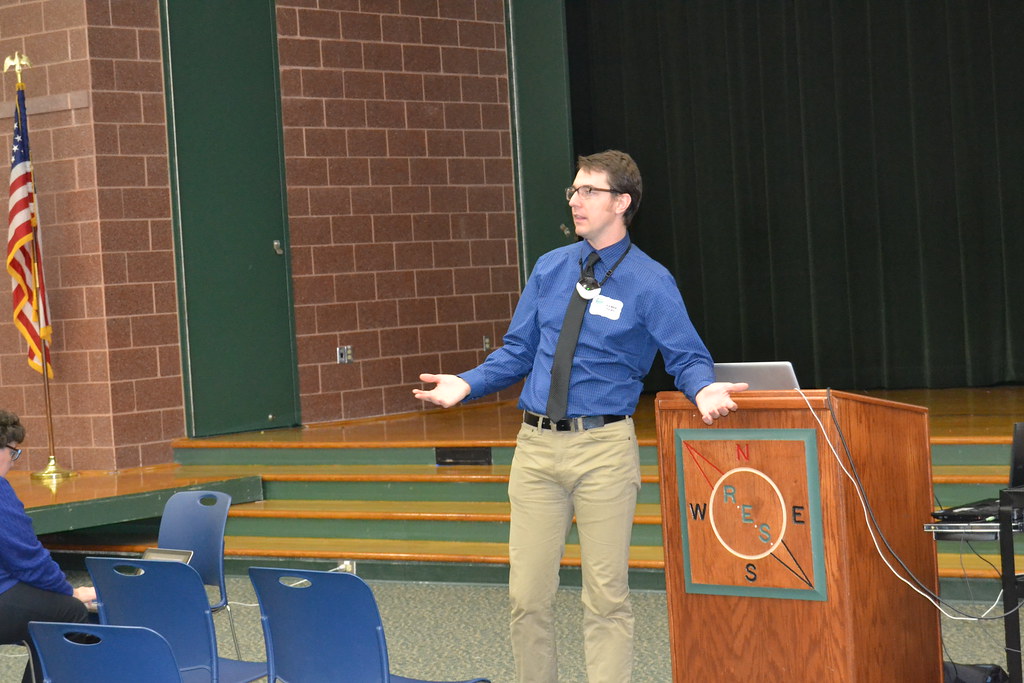 |
| Aaron Sams at PAECT event, Oct. 2013 |
Wait! Yes I do! So what I hoped to encourage was student engagement with the feedback they received on their written assignments. Conferencing does this. How many times on this blog have I mentioned the work of Lucy Calkins and Kelly Gallagher and Troy Hicks and the fantastic work done by all the National Writing Project educators, all of whom have shown again and again how conferencing with student writers not only helps the writer better understand her process and writing choices but also encourages a deeper level of reflection on where revision (not just editing) needs to happen. And not only that, but conferencing with students while other students are in the room serves as a model for everyone on how we talk and think and support writing. What would be a better use of our classtime? So I need to make time to conference/grade every essay in class. And, I have an idea for how to do it.
 |
| Photo by Laurie Sullivan |
 |
| Audio recoding app in Google Drive |
 |
| Graphic from SHSU |
There is some research being done on the effectiveness of using audio to record feedback for student writers. Dr. Jeff Sommers at West Chester University has been publishing on this idea for the past couple years. His article in the Journal of College Literacy and Learning titled "Response 2.0: Commentary on Student Writing for the New Millenium" addresses how audio recordings can be a more effective feedback tool for student writers than the traditional written feedback. So I am encouraged by this new model for grading student writing.
I am interested in how other teachers are using both conferences and digital tools to give student writers feedback. Have you used audio tools to give your student writers revision suggestion?
Saturday, February 8, 2014
Game Time
At this point last weekend, I was sitting in Philip Vinogradov's session on Gamification and Flipped Instruction at the DCIU Google Symposium. But to say that I was just sitting there would be inaccurate. Instead, shortly after Philip's opening remarks, we split into small groups and my teammates and I, who did not know one another prior to the presentation, read through the first directions which happened to refer to rolling some dice using Dungeons and Dragons lingo. It took only a few seconds for us to realize that all of us understood the directions; we all had played D and D. We were united, we were nerdy, and we quickly set to work completing the first task. It took a little while longer to realize that we had completed the first task of Philip's presentation prior to him explaining it to the rest of the educators in the room. And it was that moment that got me thinking more seriously about gamification. We were engaged from the introduction to the close of his presentation.
I am new to the idea of gamification. As a high school English teacher, I used to think that gamification referred to the use of online avatars and badges to reward student progress, which sounded a bit too much like the stickers given to elementary students, too much like an extrinstic reward. Although I have seen a number of gamification sessions listed on recent conference programs, I must confess that I dismissed it as just an educational fad inspired by teachers who had grown up playing a few too many role playing games (which I should also confess that I would be included in that group as not only did I play D and D with an actual group but also played all...yes, all...the D and D inspired video games). But when I saw that Philip's presentation also included elements of flipped learning, I was intrigued. And now I must admit that I am a bit ashamed that I had so quickly dismissed gamification as a fad. As Philip's presentation demonstrated, the principles of gamification are not simply to have fun or hand out rewards. Instead, the principles of gamification include engaging students in higher order problem-solving skills, both collaborative and competitive learning, placing learning opportunities in the students' hands. So if this skeptical teacher was engaged in the first few minutes, imagine the possibility that gamification holds for classroom planning and instruction.
Philip's presentation had our group of teachers reflecting and discussing the possibilities of implementing gamification in a variety of classrooms, from elementary math classes to high school English courses. And something that I have found myself returning to over the course of this week is Philip's helpful heuristic - Q.U.E.S.T.T. I would highly encourage teachers to review his presentation materials below for a better introduction to the principles of gamification than I could give. I also found that participating in the #levelupEd Twitter chat this past week was another good introduction to teachers in various stages of using these principles in their lesson design. The interest in incorporating the principles of game-play into lesson design is growing, and it is easier for me now to see why. The ideas of gamification and game-design thinking are not simply about rewarding players, or in this case students. Instead, the same principles that underpin problem-based learning, flipped learning, and mastery learning are also at the heart of the gamification movement. It is about inspiring and empowering learning at all levels.
 |
| Photo by peddhapati |
Philip's presentation had our group of teachers reflecting and discussing the possibilities of implementing gamification in a variety of classrooms, from elementary math classes to high school English courses. And something that I have found myself returning to over the course of this week is Philip's helpful heuristic - Q.U.E.S.T.T. I would highly encourage teachers to review his presentation materials below for a better introduction to the principles of gamification than I could give. I also found that participating in the #levelupEd Twitter chat this past week was another good introduction to teachers in various stages of using these principles in their lesson design. The interest in incorporating the principles of game-play into lesson design is growing, and it is easier for me now to see why. The ideas of gamification and game-design thinking are not simply about rewarding players, or in this case students. Instead, the same principles that underpin problem-based learning, flipped learning, and mastery learning are also at the heart of the gamification movement. It is about inspiring and empowering learning at all levels.
Thursday, November 21, 2013
All About EdCamp
I must confess that I still consider myself to be an EdCamp newbie. I attended my first EdCamp last May at the University of Pennsylvania. EdCamp Philly. Wow! I had heard of the unconference style of professional development before, but I could have never imagined how life-changing attending that first conference would be. It is not hyperbole to state that EdCamp changed the way that I thought not only about professional development, but how I thought about my teaching style. The connections and collaborations that I made at the first conference really spurred me to become more involved in helping other newbies find the conversations and resources that I had at my first EdCamp. So, that's why I volunteered to help plan the 2014 EdCamp Philly.
 Our first in-person get together was this past Friday, and I must confess, I felt more than a bit nervous. I was asked to sit down with Kevin Jarrett, Mary Beth Hertz, Kim Sivick, and so many of the enthusiastic and engaged educators that I have been following online for years. Who was I?! (In case you were wondering, that's me in the stripes.) I felt like a teenage fan girl sitting at the table with so many well-connected teachers. But I should have known better. Not only did this group welcome me, but the same sense of excitement about learning and collaborating with one another that I felt at that first EdCamp was palpable around the planning table.
 So the next afternoon when I was attending EdCampHill up in Pottstown, Pennsylvania, I knew that I had to step outside my comfort zone and not just listen to the conversations that others were having, but lead one. As session suggestions were being posted to the board, I made my move, volunteering to lead a session on flipped learning. What a great conversation. Unlike other conferences where a presenter talks at the teachers in the room, EdCamp is all about conversations. My session was just that. I shared a bit about what I've been doing the past couple of years, and then others in the room shared their experiences, raised questions, and discussed. I didn't have a slide show ready. Honestly, I wasn't even connected to the internet for my session. Instead, another session participant keep some notes on an open Google Doc for our session, which I later added to. And this is probably the best example of why EdCamp works. It is professional development that is tailored to what you want to learn about, but perhaps most importantly, it is about the connections. Those face-to-face dialogues that move our thinking forward, that get us questioning and reflecting on our roles in the classroom, and that have us sharing ideas with the person sitting next to your are invaluable. And that's why I am all in.


Tuesday, October 29, 2013
On Meeting Aaron Sams
There was only one small part of meeting Aaron that disappointed me...forgetting my copy of Flip Your Classroom which I was hoping to have him sign!
Interested in learning more about what it means to flip? Here's a little introduction I put together:
Friday, September 13, 2013
Day One
Cross posted at the Pennsylvania Writing and Literature Project blog
New
tenth graders file into my room, unsure of where to sit, trying to find a
friendly face in our World Literatures English class. Summer is over. School is back in
session. And on our first day of class,
I stand outside the classroom door, greeting students and handing them a
syllabus as they walk into the room.
This is what they expect. They
expect to sit down, whisper quietly about the new kid in class and what they
did over their summer break while their teacher stands at the front and
lectures over classroom rules, grading policies, and class projects. So when the bell rings for class to start,
and I tell them to put their syllabus away, they look genuinely confused.

As
their teacher, I want to see my high school students connecting, collaborating,
writing, and revising. And that needs to
start on day one. So instead of starting with the syllabus, we start by
writing. I have students pull out a
sheet of paper and ask them to describe who they are as writers and come up
with a metaphor for who they are as writers.
Over the course of our first day, students are writing, discussing
metaphors, and then ultimately creating simple web pages that showcase an imageof their metaphor and a writing piece that explains its significance. And it is here where the tone of our class is
set. Students are expected to write
every day. Students are expected to collaborate. Students are expected to think carefully and
critically. But I don’t have to stand in
front of them and tell them that. They learn this by doing it. Starting with day one.
And
I can do this because I’ve started to flip those more didactic lessons over to
videos. Instead of standing in front of
them going over our syllabus and expectations in class, I created a video for
students to watch as homework on that first night that goes over our
syllabus. And on that first day, I’ve
never seen so many excited faces, excited that their homework was to watch a
video…of me explaining our syllabus!
Throughout our semester, I'll move away from using my traditional PowerPoint format for presenting writing craft lessons and instead create interactive videos for each
concept with the idea that students can move through lessons at their own pace
while taking notes on the concepts and work through practice activities. Because students can rewatch the videos as many times as they want and
can learn at their own pace, I should have more time IN class to practice writing. I can use class time to draft, conference, and revise with students. Writing then becomes a community activity,
something we all do together in the classroom. I am building a community of
writers. And it all started on day one
by having them write.
How do you build your
community of writers? What activities
and ideas do you have that help your emerging writers see themselves as part of
a writing community?
Photo credit: picture by mrsdkrebs
Saturday, July 13, 2013
I'm Flipping


Okay, and all of this is being done while I'm still a bit loopy from the anesthesia I had earlier this morning when all four of my wisdom teeth were removed. So when the pain meds wear off in a few hours, this will likely be a hot mess!
Wednesday, July 10, 2013
I'm Flipping Excited

As a resource, I put together the presentation below to link to the wealth of research that I've found in my studies of the flipped approach. Enjoy and pass along!
Subscribe to:
Posts (Atom)