Showing posts with label Conferences. Show all posts

Monday, March 23, 2020

Thinking about Revision

With this gift of time as we are sequestered away in our separate homes, I've been dipping back into my writing, rereading cringe-worthy drafts of poems and half-finished stories. Whew! I need to spend some time revising!

Writing is never finished. Walt Whitman rewrote Leaves of Grass five times. Former poet laureate Galway Kinnell never seemed to deliver his published poems the same way twice, omitting and adding lines even after the poems were bound in a book.  I’ve heard both author James McBride and poet Naomi Shihab Nye talk about writing as rewriting. Naomi Shihab Nye said: “If a teacher told me to revise, I thought that meant my writing was a broken-down car that needed to go to the repair shop. I felt insulted. I didn’t realize the teacher was saying, ‘Make it shine. It’s worth it.’ Now I see revision as a beautiful word of hope. It’s a new vision of something. It means you don’t have to be perfect the first time. What a relief!”


In thinking about how I go about revising my own writing and how I teach revision to my high school students, I notice a divide. And actually, in rereading some of my posts on this space, this divide is something that I have been struggling to bridge for a large portion of my teaching career. How do I help students invest more time in their revision process? This is going to sound weird, but our current break from traditional school as a result of the COVID-19 pandemic has actually provided me some insight into revision. Let me explain.

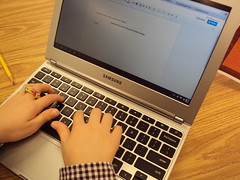
My youngest son, Lukas, is nine years old.  This past week was our first week home together as schools shut down in Michigan as a result of the spread of the novel coronavirus. On Monday and Wednesday, his teachers posted links to math worksheets and online resources for his class to access.  He was assigned reading homework, encouraged to complete a creative book report, and asked by his teacher to complete and send back work that he had missed due to a recent orthodontist appointment.  But what did Lukas want to do?  He wanted to grab the Chromebook every chance he could so that he could add to the collaborative story that he and his buddy were writing titled "Where the Dragons Dwell."

You need to understand that when I ask Lukas about writing, he tells me that he hates it. "I hate my writer's notebook!" he complains each Wednesday night.  His weekly writing pages are typically due on Thursday morning, and of course, as an English teacher, hearing him say this each week breaks my heart. But here's the thing, I know why he's saying this. I love that his teacher has students writing in notebooks each week.  I also know that my son doesn't actually hate writing.  He, in fact, continues to write more than he is assigned when he is given free choice on what to write.  What he hates is that the feedback he has received is that he needs to fill the page and not slant his writing so that his last few lines on the page only cover 1/3 of the available space on the page. He dislikes the feedback that is focused on what his writing looks like and not on what he elects to write about. This is not feedback on the content of his writing. He enjoys writing, writing so quickly that it is a bit difficult to decipher at times, but he doesn't like when feedback interrupts his work or when it is not connected to the work. In cases when he's received feedback that he needs to write more because he doesn't "fully fill the page," he protests.  He claims he hates writing and doesn't understand why he has to do it. This is also what he said when I asked him to grab a notebook so that we could write at home together this past Monday.  However, later that same afternoon when his buddy shared a Google doc with the start of a story, Lukas didn't want to put down his writing.

Over the course of this past week, Lukas has added to the story, read the story aloud to his older brother a few times to get some advice, talked through most of our meal times about the progression of the story, always focused on how to make the story better.  This is what revision should look like. What it doesn't look like is a worksheet or a series of required comments left on a partner's draft. What it doesn't look like is everyone working on the same "step" of writing at the same time. So when we do return to school, I have some ideas about how engage students in the revision process differently.  It starts even before we begin drafting.

If writing is rewriting as McBride and Nye suggest, then conversations with students about revision strategies need to begin at the introduction of each new writing assignment.  Very few published writers complete a full draft before making a tweak here or there. We revise as we go, so we cannot leave a peer-revision workshop as the last step before our students turn in a writing assignment. We must teach students to engage in revision as we go, at each step of the writing process.  Moving forward in my own classroom, this will look more like the writing workshop model with students working in small groups to draft, craft, and revise. No more revision checklists or peer revision worksheets.  Instead, revision needs to look and feel more organic, like my son's process of crafting the collaborative story with his friend.  They use the online document to add to the writing, comments to make suggestions or ask questions of one another, and the chat to talk about where they are headed in the story.  Late this past week, my son hopped on a virtual chat with his friend, and I listened in as the two talked about the upcoming chapters they wanted to write together.  This conferencing got both boys engaged in the writing and revision process. 

I use writing conferences in my high school English classes now, but typically they are conversations between the student writer and the teacher and are left toward the end of the writing process. Using my son's writing process as a model, I see that I need to help students establish similar collaborative writing relationships much earlier in the drafting process.  Connecting my students writers and giving them space to organically talk about their writing and their struggles will do more to help them grow in their confidence as writers. Moving forward, I need to help my students establish trusted writing partners, peers that they can rely on throughout their writing practice, much like my Lukas relies on his writing buddy. 

I'll rely on the work of educators like Penny Kittle and Kelly Gallagher to guide me as I think about how to reframe writing assignments in my classes.  Having the opportunity to hear them talk about their work and book 180 Days last spring at the Michigan Reading Association conference was powerful.  And I would love to hear from other educators about your successes when in comes to engaging students in the revision process. 

Friday, July 1, 2016

Finding Time

I'll admit it. I'm guilty.

I'm a chronic over-planner.

Each class period starts with our opening routines and check-in, review of previous learning, daily lesson activity, and a launch to close the class period. I rely on routines to help my students move efficiently in our learning space and maximize our time together as a learning team. Like me, many teachers learned in our methods courses and classroom management classes techniques for grouping students; we were trained to manage how students interact with one another. A great deal of the art of teaching is managing how class time is used, how students move about the room, and how they interact. The classroom is a very structured setting.

But here's the thing, this might not be the best way to think about our time in the classroom. In fact, this might be one way that we are structuring students out of authentic collaboration.

Attending the TED Summit has me reflecting on the skills I want students to leave my classroom with at the close of the school year. And here's what I now realize: my micro-managing group work is stifling students' opportunity to truly connect and collaborate. Students will never become creative innovators if teachers continue to map out when, how, and with whom students connect. Ideas come in open spaces.

What I am most thankful for is the in-between spaces that this Summit allowed for. It was in the ample time given between sessions, after meals, and throughout the workshops that encouraged all the organic and energizing collaborations and connections. Moments of serendipity and innovation blossomed because we had time to reflect, to connect, and share our stories.

This is what I  hope to bring back into my classroom. Teachers must build in space and time for authentic conversation. No homework questions to answer or worksheets to fill out during a discussion, just space for the informal and the authentic. This is where connection happens, where innovation happens.

There were so many moments of serendipity at the TED Summit. The other evening while attending the cowboy dinner on a ranch in Banff, one of my fellow TIE teachers (we've started calling ourselves the TIE fighters) let me know that another attendee, Melanie, was looking for me. I've discovered this is not unusual at a TED event. Attendees are invested in connecting. When we found one another a few minutes later, it turned out that we had a mutual friend. We took a selfie together for our friend and ordinarily that might have been the end of the interaction, but neither of us had any place we had to be. We weren't eager to rush off. There was time and space to connect. Melanie asked about the TIE program, and I shared a bit about my innovation project for the program - Mentoring Passion. As I explained, I watched her eyes widen. "You're kidding!" It turns out that Melanie is also a high school English teacher, one who is passionate about helping students find their passion. We were able to talk a bit more about our shared passion and have plans to connect upon our return from the Summit.


We all have so many stories like these from the Summit.  In between sessions, we'd run into people relaxing on the lawn and discover a commonality. While in a workshop, we'd hear a presenter share something that we knew a fellow TIE member might also like. We shared our connections in order to build further collaboration. While in a workshop, my fellow TIE educator, Susan Herder, connected with a woman who works as an advisor to actors, athletes, and other creatives. Her role is to connect her clients to philanthropic organizations that support the causes her clients are most passionate about. In the open time between workshops, we were able to grab a picnic table and chat about her role in connecting her talent with the experts and organizations that her clients are interested in helping. It was striking how her work and my TIE innovation project are similar in a number of aspects. We each shared our process for helping people both understand their passion and then connect with the right people in order to learn more. She was able to help me thing through how best to build a network of experts willing to mentor students in the area of their passion. Her advice to look not for individual experts but for foundations and professional organizations with a diverse membership has helped to change how I am thinking about my project. And this connection happened because throughout sessions, in those in-between moments, we were encouraged to connect and to listen to one another's stories. We didn't need to rush between scheduled events; no bell to signal us to get moving. TED left spaces and time for connection. This is what I will take back to my classroom.

We do not honor student stories and ideas when we pack our class time tight with activities. Opening up time and space for students to share and connect is the fertile ground where ideas come into bloom. We need to consider how we are using our class time and spaces to foster collaboration and innovation.

I understand that secondary teachers are particularly limited by the amount of time we have with students each day. My 55-minute class periods are marked at each end by bells. I don't have the luxury of giving large blocks of time for open discussion each day. But there are a number of small changes that I can make in how I use my class time and space to foster organic connections and open up space for innovation.

First, I must consider the physical space and set-up of my classroom. Is my room arranged in a way to foster collaboration? Can students easily move about the room and find the supplies they need? Are there comfortable spaces for students to have small group discussions? Are there spaces for my students to work together on group projects?

Second, I need to consider how I am having students connect. How are students working in groups? Are groups engaged in purposeful activities that will lead to innovation? Am I opening up time for students to explore ideas?

Our class time with students is valuable, and we should be using that time to facilitate the activities that students cannot complete independently at home. Our classrooms need to be places filled with collaborative conversations. Our students need to learn how to speak with one another in order to grow an idea. We all need to make time for time. Let's make our classrooms spaces where students have time to make their own connections, collaborations, and creations.

Thank you to all of the TED community for inspiring me in so many ways this past week!

Tuesday, June 28, 2016

Framing Innovation

It happens at nearly every conference I attend.

"Oh, I recognize you! It's the glasses."

The thick black cat's eyes have framed my perspective for the last seven years. Sometimes the opposite will happen. If I am not wearing my glasses, students and even friends have walked right by me without a spark of recognition. These frames have become my brand, if you will. It is how people come to recognize and remember me, at least initially. But a conversation at last night's TED Summit dinner has me looking at my lenses through a new perspective.

Amanda Palmer, who happens to be here in Banff for the TED Summit, writes in her book about how her perspective was changed by shaving her eyebrows, a look that has become part of her signature style:
"I found to my delight, that it had the unintended side effect of causing people to look me in the eye. When you have creatively painted eyebrows, people will assume you're approachable and affable, and talk to you."
This has also been true of my black cat's eye frames dotted with silver stars in the corners. I have been stopped on the street and questioned in the checkout line. They are a ready made conversation starter. And as I am not the best at small talk or even introducing myself to strangers, my glasses help me connect immediately. There was the barista who had to know where I got my frames because they reminded her of a picture of her mother, which was a reason I was drawn to them as well. My mother wore a similar pair in her high school graduation photo. The mother who stopped me to share her love of the singer Lisa Loeb (again, me too). My frames are a way to form immediate connections, to share stories, and move beyond simply getting to know someone by asking what they do for a living. These frames introduce me before I even open my mouth to speak.

And last night at dinner, TED fellow Tunji Lardner helped me think through my lenses from a new perspective.

Over our first course, Mr. Lardner asked about the role of the new TED Innovative Educators within the larger TED community. I described the innovation projects that each of us would spend the next year working on. He asked about how we, those of us sitting around him, framed the idea of innovation. What is innovation? The conversation evolved to discusseing how elements of design and innovation are dependent upon a particular cultural lense. Innovation, real innovation, must then both acknowledge that frame and move beyond it. Our culture frames design, frames innovation. What then is innovation at a global level?
Photo by TED Innovative Education YauJau Ku

So now I'm thinking about how my glasses might also serve as a reminder. The fat black frame is always present in my periphery, serving as a reminder for me to check my perspective. I am always aware of the frame through which I interact with the world. My glasses tangibly remind me that I have a particular perspective and perhaps if I want to think outside that frame, I might need to remove my glasses.

Friday, March 11, 2016

Writing My Keynote

No, I haven't been asked to keynote a conference. However, after attending Todd Bloch and Heather Gauck's session titled "Finding Educator Voice" at the Michigan Association of Computer Users in Learning (MACUL) conference yesterday, I had a bit of an ah-ha moment. I need to write my keynote.

I go to a lot of conferences and professional development workshops.  I'm a bit of a self-confessed PD junkie. An Edcamp in 60 miles and I am there! The conference sessions that I am drawn to are both interactive and story-driven, much like a good keynote address. They draw you in with the speaker's personal experience but leave you with a "now what," as in, "Now what are you going to do about this?" Good presentations are those that hone in on a theme and drive thinking forward by coming back to a motif that reminds the audience of that central theme. Jennie Magiera does just this when she speaks. Her keynote at the Chicago ETTSummit in 2014 connected a large group of educators both by having us interact with one another and by reminding us how we connect global for a singular purpose - empower learners.

Now I have done a lot of presentations and workshops in the last two years, over twenty presentations focused mainly on the getting students to write and create for authentic audiences.  A recurring theme in many of my presentations has been the idea of moving from engaging students to empowering learners. But many of these presentations have been how-to workshops, or at their worst they have been how-did, meaning here's how I did this. I hope that some of these presentations have been helpful for those educators in attendance, but my guess is that they may not have been very inspiring.

I need to stop thinking of my audience as teachers and begin addressing them as learners. That's what we are.  All of us who are PD junkies are just that because we love learning.  So for my next presentation, I need to reflect on how to empower and inspire the educators in the room to move to that now-what moment.  I need to present my keynote and not simply a how-to manual.

And I have an idea for my theme, something about getting out of your seat and onto your feet.  So just in case you are in need of a keynote presenter, I'll be ready.
Flickr CC image by Thomas Hawk

Thursday, March 10, 2016

Simply Incredible Week

It is Thursday, and the week isn't even over, but I'm confident in saying that this may just be one of my best weeks ever!

Please forgive this not-so-humble-but-totally-excited brag:


Sunday afternoon I received an email invitation from Fox News to attend and ask a question at the Democratic Town Hall hosted in Detroit. So on Monday afternoon, my husband and I hopped on the road to Detroit.

As we were driving, I learned that my classroom was one of the selected recipients of a 1:1 grant by the EdTechTeam. We have 36 Chromebooks on their way! I couldn't resist. I immediately texted my students when I found out.  When I returned to the classroom on Tuesday morning, the excitement was palatable.

Yesterday, a reporter from the Ionia Sentinel-Standard visited my class to do a story on how my students started an anti-bullying group at our school. I could not be prouder of the students who have spearheaded this initiative. Their worked stemmed from a project-based learning activity connected with our reading of The Crucible last semester. And although the project has long since been completed, the students are still working hard to address issues of bullying and promote kindness in our community. 
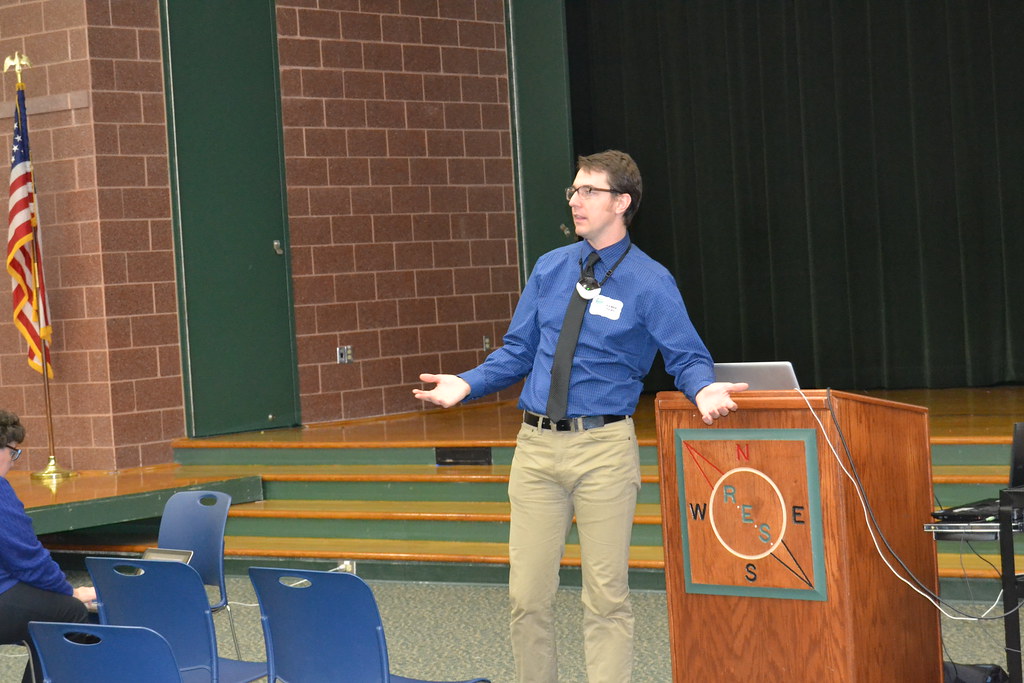
Today I am presenting with four of my students at the #‎MACUL16‬ conference in Grand Rapids.  Together with Brad Wilson of WriteAbout.com, we are sharing how writing for authentic purposes and audiences changes how emerging writers engage with the process of writing. And of course, I needed to take my student presenters out for Philly cheese steaks as a way to say thanks!
Not sure what I did to deserve so many blessings, but I am certainly grateful!

Tuesday, June 30, 2015

Presenting with Students

Photo by Billy Krakower as we took our morning brain break at #TCT15
This past Friday, as teachers from all over the world started packing their suitcases for the annual International Society for Technology in Education (ISTE) conference held in our own City of Brotherly Love, a group of excited and passionate teachers were getting up early, having scheduled their trips to arrive a few days in advance of ISTE in order to participate in the inaugural Tomorrow's Classrooms Today conference organized by the amazing team of Evolving EducatorsBilly Krakower, Scott Rocco, and Brad Currie. The opening keynote by Cybraryman, Jerry Blumengarten (who really does have a web page for everything), and a crowdsourced lunchtime keynote by my friend Rich Kiker helped to frame an afternoon of learning that was filled with sessions on gamification, flipped-learning, project-based learning and assessment, blogging, and innovations of all sorts.

Christy Brennan's sketchnotes of Jerry Blumengarten's keynote
And perhaps my favorite part, presenting with my colleague and friend Christy Brennan and three of my students!  I was fortunate to present with Christy and a few of my students at this past January's EduCon in Philly, and it went so well that we though, let's do it again!  One of my former students, Jenna, who presented with us at EduCon, joined us again on Friday for our session on Mentoring Passion. Two other students, Kristin and Emily, who had just finished 10th grade English with me also joined to talk about what they each had learned when Kristin surveyed the student body to design an new elective course and Emily interviewed and worked with learning space designers to propose (and have accepted by our school!) a new design for our upstairs library space. And because we had a small group of teachers in our session on Friday, there was time to talk more collaboratively about passion-based learning, fostering mentorship opportunities, and for my students to share their experiences of what worked and what didn't as they pursued their inquiry. The teachers that joined us for Friday's session were able to ask my students about their process undertaking our #HavPassion research.

There are so many, many positives that come out of asking students to present at conferences. Perhaps the most obvious reason to encourage student participation in education conferences and workshops is that as a group of teachers sitting in a room talking about educational philosophies and practices we're not getting a full picture of what is happening in the classroom if students aren't also seated at the table.  For all our talk of student-driven learning and student-ownership, there are very few students presenting their work outside of the classroom. If our goal is to innovate, to change what is happening in education in order to help support more critical and creative thinking, students need to be involved in our conversations about what that looks like. My students showed up on a Friday during their summer vacation to present to a bunch of teachers. Hang on. Let me repeat that.

My students showed up on a Friday during their summer vacation to present to a bunch of teachers.

The students were not getting any points for showing up. There wasn't a grade involved. They were not getting extra credit. So why did they want to present? Because what they undertook in our classroom, authentic research that included contacting and conducting interviews and primary research, that involved finding mentor texts and becoming a mentor, that involved a lot of blogging, and time, and effort, was something they want others to hear about. They are passionate and proud of their work. So passionate that they took time out of their summer vacation, arranged their own transportation, and volunteered to talk in front of strangers about what they had learned. When was the last time a student got that invested in a multiple-choice test?

So here's a little more about what they presented. Below you will find our slide deck on Mentoring Passion. Be sure to check out the speaker's notes as Christy and I loaded them up with links and information.  Beneath that you will find the recording of our presentation shared live via Google Hangouts.


Saturday, October 18, 2014

Edcamp Delco

My obsession started in May 2013.

And now I must confess, I am addicted to Edcamps. What are Edcamps, you ask. An Edcamp is an informal unconference-style day of professional development organized and given by the local participants with sessions determined at the time of the event. The goal of these free, participant-drive professional development conferences are to connect educators, to share innovative instructional strategies and technologies, and to collaborate about ways to transform education for all students.

Typically, the focus of an Edcamp is on conversation and participation, rather than on presentation. Participants choose what topics to discuss and decide where the conversations go. Arrive with an idea for a session that you would like to lead and be ready to learn. A session might explore a technology tool, a discussion about best practices or a collaborative presentation with multiple facilitators. If one session does not meet your needs, "vote with your feet" and head to a different session. Session topics may include instructional best practices, technology tools in the classroom, proficiency-based grading, homework and more.

My obsession started with Edcamp Philly in May of 2013 and culminated today with Edcamp Delco, of which I am one of the founders.  I'll be sharing more in the coming week about what we did to plan this event as well as what I learned from participating in today's Edcamp Delco.  But for now, check out some of the resources and connections that we shared this morning through Twitter.


Wednesday, July 30, 2014

Reflections on ETTSummit and Empowering Writers

I can't thank Chris Loeffler enough. I borrowed a lesson that he originally shared at Edcamp Delaware a few months back. In order to inspire his elementary students to reflect on how they learn, he asks them to fold an origami crane in silence, without the help of a YouTube tutorial or the ability to talk with friends, in a set amount of time. And this was how I started my presentation this morning at Chicago's EdTech Teacher Summit. Educators from all over the country sat in silence for two minutes trying to fold a crane based on a worksheet of directions. Not one was able to complete the task. And as we talked afterward about what they would need in order to be successful - flexibility with time, the ability to collaborate and to connect with others completing the same task, access to a model, availability to look at a visual tutorial - the inherent lesson of this activity became apparent.

When I first started teaching high school English, this is what my classroom looked like. I was even one of those teachers that during the first week of class would hand out that ubiquitous “Directions Test.” You know, the one that had a list of 30 to 50 questions, but in the directions it states that students should do nothing, and then you sit and wait for students to yell out, “shark!” or go sharpen their pencil 12 times, and the class has a good chuckle at the students who didn't read the directions. My class was organized around directions and instructions and not centered on learning. And for my first couple of years, as I taught primarily honors students, this worked. My honors students were good at following directions. They were good at playing school. However a couple years in, I was given both mixed ability courses and a group of struggling ninth graders, students who did not chuckle when we played the directions test. And it was in that moment that I was called to reassess what I was really teaching and why?

In May 2013, I attended my first EdCamp conference, EdCamp Philly, and it was here that I met Angela Maiers and learned of her Choose2Matter initiative, a project largely based on the work of teachers using Genius Hour and 20% Time projects in their classrooms. Learning more about these passion-based learning experiences in the context of the EdCamp unconference format helped me rethink how I was teaching writing. I had heard of Google’s 20% time in the past and had been using a writing workshop approach in my 10th grade classroom as a way to teach research skills, but when I heard other area teachers talking about their experiences with Project-Based Learning (PBL) and 20% Time Projects, it clicked how crucial choice, voice, and purpose was to the composing process.

Following EdCamp Philly, I started to learn more about passion-based learning experiences so that in the Fall of 2013 I could engage in 20% time research writing with my 10th grade English students. So what’s the 20% Project all about? The basic premise of the 20% Time Project is that it is student-driven, passion-based learning. Student writers are empowered when choice goes hand-in-hand with autonomy over their learning, opportunities to connect and learn from mentors, and safe spaces to reflect on the failures and successes that come as part of their research process. What my students and I learned as we engaged in our 20% research projects was our most memorable learning experiences came when we were sharing our reflections. This is a component that is often times missing from the more ubiquitous research writing assignments that students complete in school. And as a writing teacher, I wanted to know more about this? What impact does choice, autonomy, purpose, and reflection have on the writing skills that students develop as they engage in research? So, following the completion of their 20% projects, I spent some time researching what other writing teachers have had to say about these elements but have also surveyed and interviewed my 10th grade English students.

Over the last few months I have been both surveying and interviewing former students about their experiences with our research endeavors. I asked students to review our Pennsylvania Common Core State Standards (CCSS) for expository writing and reflect on what skills we addressed as we engaged in our research and writing processes. Additionally, I asked students to think about how they decided on their research topics, how they found their mentor texts and experts, and their thoughts what worked and didn't as we engaged in both our traditional research writing and our more inquiry driven 20% research writing project. In reviewing my students’ responses, what I discovered was that the strengths they reflected on most were those that fell into seven themes. EMPOWER is an acronym for the seven elements of our research writing that students identified as being crucial elements in their success.
And these elements are not only key for developing student writing skills but connect with learning in all content areas.  Empowering students through choice, voice, authentic purposes is not something that is unique to teaching writers. We know this. Yet even though we know that in combination these elements grow creative, collaborative, and critical thinkers in all content areas, we don't always see these sorts of learning opportunities in our secondary schools.  Passion-based learning sounds too "fluffy" or too messy or too risky. However, what my research has shown me is that this "messy" learning does more to grow both academic skills as well as those intangible skills of grit, resiliency, and perseverance. 

As I reviewed my student survey results, as I spoke with my students about what they had learned and how they had learned it, so many of their responses echoed the research done by other educators and psychologists interested in passion-based learning. Students learned more from the process of being able to not just decide on a topic to research, but on the multitude of choices they needed to make in order to find a mentor, craft both traditional writing and digital writing pieces for real audiences outside of the classroom, and decide upon how, when, and where to present their work to a larger audience.  My students discussed the tone of their writing as they crafted emails to contact potential people to interview. They had to analyze their intended audience as they prepare their pitch videos and final TED-style talks. Students reflected not just on the steps of their process but on their pitfalls, revisions, and how they learned in their weekly blog posts. And these are the higher order thinking skills that we want our students working toward.  Their writing was audience and context-driven.  It was purposeful. It was meaningful. It was empowering. 

I shared some of this research in my recent EdTech Teacher Summit presentation.  Feel free to take a peek at my slides and notes below. I would love to hear from you! Are you completing passion-based learning projects with your students? What questions or suggestions do you have? 

Thursday, June 26, 2014

Reflections on #FlipCon14

It began with my first Voxer conversation a few days before FlipCon14.  Chris Crouch and I connected using Voxer, looking for a way to share our upcoming conference experiences.  I was headed to FlipCon, the annual conference for educators involved with flipped learning, and he was going to be traveling to Atlanta for the annual ISTE conference. Both of us agreed to share the cool tools we learned about at our conferences, but by the first morning of FlipCon, we hadn't quite figured out the best way to do that.  Not long after I picked up my nametag and sat down with a cup of coffee in Mars, Pennsylvania, eagerly waiting for the opening keynote address by Molly Schroeder, I heard the now familiar chirp of a Vox alert.  Chris wondered if he might use Voxer to "sit in" on FlipCon. I wasn't quite sure how to do that without running through my phone battery quickly, but I had another idea.  What about a collaborative Google Doc of session notes?  And rather than just me sharing my notes from each session, I asked the community of educators attending FlipCon14 both in person and virtually to help me.  I tweeted out a link to my open Google doc, requesting help building a  collaborative session notes for the presentations given at the conference.  What I didn't expect was just how many people were interested in helping build our digital conference resource.


ELA Flippers - Cheryl Morris, Andrew Thomasson, Kate Baker, Beth Oing, and others
Over the course of my two days at FlipCon14, I had people both in person and virtually sharing ideas, links, and presentation resources via our open document.  By the close of the conference yesterday, the Google doc, which got its start just a few minutes before Molly took the stage on Tuesday, was already over 35 pages long. It continues to be a living document, filled with session links, quotes from presenters, photos, and tools of all sorts. And in a way, we used this collaborative document to flip our Flipped Learning conference.  Teachers from all disciplines and levels, from a variety of education backgrounds, connected to explore ideas, share with one another, and build our own resource for learning. We took ownership of our learning experiences, shared new knowledge, and applied it to our collaborative space.  And these are the ideals of flipped learning.

Jon Bergmann and Aaron Sams sharing stories
Aaron Sams and Jon Bergmann, founders of FlipCon, share in the new book Flipped Learning: Gateway to Student Engagement that flipped learning transforms the learning space into one that is student-centered, with learners using face-to-face class time to engage in creative and critical thinking.  "Flipped learning is a pedagogical approach..." Sams and Bergmann write, that transforms the classroom into a "dynamic, interactive learning environment where the educator guides students as they apply concepts and engage creatively in the subject matter" (6).  So it was powerful experience for me as an educator to also be emersed in that dynamic environment at FlipCon.  Throughout the two days of FlipCon14, participants were encouraged to connect, collaborate, and create.  This was not your sit-and-get type of conference.  I walked away from FlipCon not only with a some new tools (and a couple new books!) but with many new connections and the start of a number of new classroom collaborations for this coming fall. FlipCon was just the beginnning, and much like I hope my students do, I walk away from the experience with more questions than answers and excitement about where those questions will lead me.  

Jason Bretzmann leads a fantastic panel discussion
FlipCon14 = Selfie Bingo. Here's a selfie with Kate Baker

Wednesday, May 14, 2014

EdCamp Awesomeness

I'm excited to be one of the organizers of this weekend's Edcamp Philly, happening on Saturday, May 17th between 8am-4pm at Philadelphia's Science Leadership Academy.  This year we are celebrating our fifth anniversary.  Celebrating with us will be a record number of educators from the Philadelphia region.  In 2010 a group of Philadelphia teachers organized the first unconference for educators, and over the last five years, hundreds of EdCamps have been organized by and for educators all over the globe. 

Unlike traditional professional development conferences which have schedules set months in advance by the people running the conference, Edcamp has an agenda that’s created by the participants at the start of the event. Instead of one person standing in front of the room talking for an hour, people are encouraged to have discussions and hands-on sessions. And one of the best parts - it free!  This year, over 500 teachers from our area have signed up for free tickets.

Built on principles of connected and participatory learning, Edcamp strives to bring teachers together to talk about the things that matter most to them: their interests, passions, and questions. Teachers who attend Edcamp can choose to lead sessions on those things that matter, with an expectation that the people in the room will work together to build understanding by sharing their own knowledge and questions.

There is still space available and we would love for you to join us for this event. Find more information and sign up for free tickets at www.edcampphilly.org.

Tuesday, April 15, 2014

Recording Feedback: The Potential of Recording Writing Conferences with Students

Flickr Creative Commons Image by Pete O’Shea
I've pulled out back issues of the English Journal, dusted off my copies of Kelly Gallagher's work. In the course of my research on using digital tools to provide students access to audio versions of writing conferences, I have reviewed what compositionists from Peter Elbow to Ralph Fletcher have said about the need for supportive, verbal feedback during the writing process. Lucy Calkins and Nancie Atwell, two gurus of conferring in the classroom, strongly advocate for face-to-face writing conferences with students over the more traditional written evaluative feedback. Verbal feedback is powerful. And although technology has certainly changed how we work with practicing writers in our classroom settings, there are a few things that remain constant. First and foremost is the idea of student ownership. In order for students to remain invested and engaged in their writing journeys, they must maintain authorial control over their content and rhetorical choices. As a result, when teachers provide feedback to our student writers, we must engage in that process in such a way that does not hijack the writing from our students. As Lucy Calkin once wrote, "Teach the writer and not the writing. Our decisions must be guided by what might help this writer rather than what might help this writing." Our students learn to write when they experience the writing process on their own terms and not when teachers dictate when, where, and how to revise a single written assignment. But, as Peter Elbow suggests, writers also need supportive feedback in the form of interested readers. This insight, evolving out of a process-based approach to teaching composition, suggests that feedback from an engaged reader is a crucial component in learning to write with confidence. Supportive, verbal feedback helps writers maintain ownership over their written work as well as helps student writers clearly imagine the position of their reader.

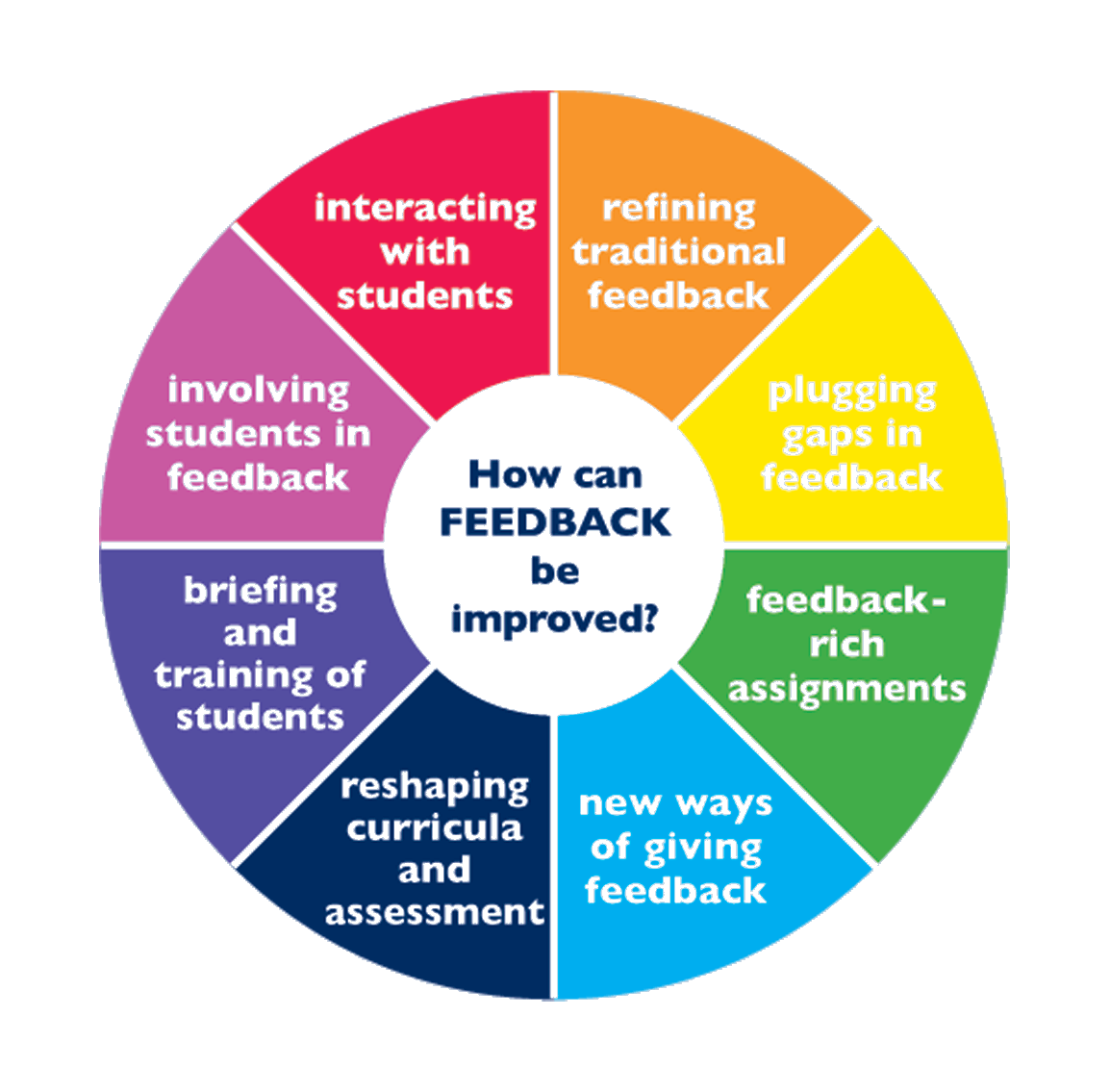
Enhancing Feedback from the University of Edinburgh
And this is why writing conferences can be powerful tools to support developing writers. Not only are student writers better able to descern the tone of the feedback given by a teacher during a face-to-face conference (rather than attempting to interpret the disembodied written comments of the teacher on paper), but the verbal conference allows for the student to maintain control over his work. The teacher is not marking up the student's work. Instead, the act of conferring is a dialogue between writers about rhetorical choices; the act of conferring supports the writer and not simply a single piece of writing. Additionally, because these conferences happen in the presence of other students in the classroom, there is the added benefit of supporting other writers in the room who overhear. Penny Kittle writes in her book Write Beside Them, "Students want to hear what other students are writing about and will listen in, doubling or tripling the value of that writing conference. Writing depends on talk" (86). So it makes sense that using audio recording tools to capture and share these conferring moments can become a powerful tool for providing feedback to student writers.

Co-director of the National Writing Project at Rutgers University, Sara Bauer published an article in 2011 in the English Journal on her experiences using audio comments to provide feedback to her high school writers. In her article "When I Stopped Writing on Their Papers: Accomodating the Needs of Student Writers with Audio Comments," Bauer writes, "...audio feedback enables my comments to become much more developed and targeted to the individual writer than they had been when I confined myself to cryptic and cramped notes written in the margins" (66). Using audio commentary allowed Bauer to more clearly develop her reactions to a student's written work, and in doing so, opened up opportunities for her students to reflect on their rhetorical choices. Bauer's comments were not limited to fixing grammatical or content errors, but instead focused on how she responded to her students' work as an interested reader. What did the writing evoke in her as a reader? What did it make her wonder? Where did her understanding break down? "The practice of making audio comments goes beyond assisting students with revising a particular assignment," Bauer writes. "I was able to target my instruction so that students could learn about themselves as writers and develop strategies for avoiding common pitfalls on future assignments, thereby strengthening their writing performance over the year" (66). However, Bauer used her audio comments in lieu of written feedback. Her comments were not a recording of an actual conferring session with her student writers. In some ways, her audio commentary was still her enacting her authority over the student's work as an instructor handing down directions for improvement.

Although there is a great deal written about the power of conferring with student writers and emerging research about the benefit of using audio comments to provide feedback, as of yet there does not seem to be research on the merging of these two feedback practices. However, there does appear to be an interest in the possibility offered by using digital tools to record student writing conferences. This past week I developed an online survey of writing teachers' attitudes and practices for providing students with feedback on their writing. Using social media and email, I have so far received responses from 22 educators from a diversity of teaching situations. Just over half of the respondants are from the greater Philadelphia area while the remaining hail from the Northeast of the United States to Canada's western coast. Educators from elementary school through collegiate level responded, and nearly all of the respondants voiced an interest in learning better strategies for providing student writers with timely, supportive feedback. Only three of the respondants felt confident in the ways in which they provided their student writers with feedback. Although a majority of the teachers who responded felt that they had more to learn about providing feedback, well over half had used digital tools to provide feedback to their students writers with varying degrees of success. Two of the teachers who responded were already using an audio recording Add-On in Google Drive to leave audio feedback on their students' written work. So there does seem to be an emerging trend of using digital tools to provide feedback and thus opening up possibilities as both teachers and students have the ability to access that feedback anywhere at any time. But the most often made comment was about timing and a wish for more time to work with students individually on their writing. Although this seems disappointing, in fact there is great opportunity here as using digital audio recordings during conferencing sessions may be a way to open up some of that time. Using and sharing audio recordings of conferences with a class of students may help to build a library of feedback which students would be able to access when and where ever they needed it. A digital library of recorded conversations with student writers about their writing process may be a helpful way to think about providing supportive feedback to practicing writers.

In the coming week, I hope to have more teachers complete my survey (hint, hint), and I also am looking to interview a few teachers who are already using audio tools to provide student writers with feedback. My goal is the connect with those teachers that are using digital tools to audio record comments in order to pilot the idea of recording conferencing sessions in addition to trying this approach in my own classroom. And I would love to hear from you!

Tuesday, April 1, 2014

Gone Hunting. Be Back Soon?

I have over researched. It is what I do. I get excited about an idea, and I start hunting for every book, every article, every blog post ever published on the topic. And I am a very good hunter. I have tracked down every mention of “feedback” hiding in the indexes of books that line my shelves. I have retraced my path through the works of familiar writers - Troy Hicks, Donald Graves, Penny Kittle, Kelly Gallagher - and in these footprints, I have found new paths to follow. Unfortunately, I get so caught up in the hunt that I lose track of my starting point. And that is where I find myself today, lost in the woods, hunkered down in tomes on feedback and conferring as I try to suss out where to begin. So let me retrace my steps a bit.

Like so many English teachers, I spend hours writing comments on student writing. Having taught for just over a decade, you would think I would have gotten the hang of managing the paper load of giving student writers feedback. Yet instead getting better, I’ve gotten worse….much, much worse. When I first started out, I could get through a stack of 30 or so papers in a couple of hours. Today, it takes days...okay, weeks. But it is not as dire as I am making it sound. When I first started teaching, I would assign essays. Each student wrote to the same prompt. Each student would turn in nearly the same paper. Each comment I wrote was nearly the same as the last. What were students learning about writing? Nearly nothing. So over the years, I changed how I teach writing. When we write in class now, most of the writing that we do is for a purpose and an audience outside of just me as the teacher. The feedback I give students today is not simply in the form of grammar corrections and a paragraph at the close of the paper they have turned in for a grade. I have learned from the gurus - Penny Kittle, Peter Elbow, Ralph Fletcher - that feedback in form of questions helps my emerging writers reflect on the writing choices they make. And my students are writing and publishing in spaces where others can read and give feedback as well. Technology has changed not only how students receive feedback on their writing, but also when and where they get that feedback. This is what takes time. And unfortunately, I am frustrated in how I am using my time.

Because we use collaborative online writing tools like Google Docs to turn in our written assignments, students know they have access to help when and wherever they need it. Learning and writing are no longer confined to the classroom. The teacher-student relationship is no longer confined to the physical classroom. So as my students are working on a writing piece, it is not unusual for them to message me or shoot me a quick email to ask a question about a sentence or a paragraph idea. And wherever I happen to be, in front of a computer or shopping for groceries, that little ping from my phone alerting me that a student is working on developing their writing makes me smile. I must oblige, and so I send off a quick response, a question to guide their revision. But as you can imagine, the few days before a writing piece is due, those pings multiple becoming a cacophony of unmanageable requests for feedback. I see students engaging deeply in the process of their writing as they request feedback, but those requests are often last minute and many times requesting help editing rather than support for larger revision issues. So, how do I spend less time answering emails at all hours and encourage more meaningful revision and reflection on writing? Let me ask Nancie Atwell and Peter Elbow.

Both Atwell and Elbow point out the dangers of over evaluating student writing. Student writers are empowered when they maintain authorial ownership and autonomy over their writing endeavors. Marking a student’s paper with the dreaded red pen or even using digital tools to heavily comment in the margins of a student’s writing diminishes the control that the student has over his or her own piece. As Elbow points out in “Ranking, Evaluating, and Liking: Sorting Out Three Forms of Judgment,” we condition our students out of reflecting on their rhetorical choices when we over comment. Elbow writes, “constant evaluation by someone in authority makes students reluctant to take the risks that are needed for good learning -- to try out hunches and trust their own judgement.” And this is in part why Peter Elbow and Nancie Atwell among others advocate for teachers to instead engage in verbal conferences with student writers. Conferring with students maintains the student writer’s authorial control over his work and opens greater opportunities for teachers to have conversations with the writer about his rhetorical and content choices. Rather than the one-sided feedback that students get through a teacher’s written comments, writing conferences encourage reflection and support the student’s autonomy. But, conferences take time...lots of time. So, how might we combine the accessibility that the use of digital tools offers with the support that conferencing provides?

Audio recording! Here’s my idea: when I conference with a student writer about her work, I’m going to use the audio recording extension in the Google Drive Add-On menu to record the conversation that we have about a particular writing assignment. That student can then return to her document later and replay our conversation. And, because I have my students turn their work in using shared folders in Google Drive, if that student opens the privacy setting on her piece of writing so that others in class can see it, her peers will be able to also replay the audio file of our conference. Within the shared folder, students can have access to multiple writing conferences. In her book In The Middle, Nancie Atwell writes about the importance conferring with writers, stating that conferences have a greater impact on how student writers learn than any lesson or comment that a teacher could give (17-18). Using shared audio recordings of conferences to give feedback could open up new ways avenues for students to reflect on their writing choices. And there is some emerging research on the power of using audio tools to teach emerging writers.

Jeff Sommers in the recent volume of the Journal of College Literacy and Learning writes about the power of recorded voice responses to student writers, an activity he calls “Response 2.0”. He writes, “Response 2.0 can be fuller, deeper, and broader than written response because most teachers can speak faster than they can write or type, and the technology itself frees audio and video responders from the constraints of space on a printed page of text” (35). Sommers’ review of how university writing professors are using audio and video commentary to give feedback to student writers gives writing teachers from levels ideas for how technology may be able to help our practicing writers reflect and engage more meaningfully with their writing endeavors. His review of previous research and responses from his own student writers helps us to imagine how digital tools may enhance our classroom efforts and offer more supportive feedback.

In my hunt to find support for using digital recordings to give student writers feedback, I have found some promising leads. Now, I need to gather what I have found and make some tracks of my own.  Let’s put this theory into practice!

Wednesday, March 12, 2014

Local PD

Slice of Life Challenge, Day 12

Frustrated does not begin to cover how I am feeling.  I had to make a call last night, actually several calls, as the weather reports for the ironically named storm Vulcan (seriously, who names a blizzard after the Roman god of fire?!) projected me driving through somewhere between eight inches to a foot of snow in what many news sources are anticipating as the worst driving conditions of the winter. And I was already a little anxious at making the 14 hour drive with my two little boys without a second driver to help.  So I made the calls.  I will not be presenting at the Michigan Association for Computer Users in Learning (#MACUL14) conference in Grand Rapids tomorrow.

I was slated to do a short presentation on connecting young writers with authentic audiences using 2.0 tools.  My presentation weaves in some of my own action research on using elements of Connected Learning in my high school English classroom. I articulate a model I came up with for creating connected writing assignments, and then share an example from my classroom of students completing a 20% time research project.  In fact, my presentation for MACUL was based on the same one I was asked to do for the Pennsylvania GAFE Summit a few weeks ago but which also was cancelled as they restructured the session offerings for a smaller audience.  So, my last two presentations, two that I was very much looking forward to, didn't happen.

So I'm frustrated.  And not with the weather or with conference organizers.  I am frustrated with myself.  This is the first time in quite a few years that I have put myself out there by applying to present at conferences.  I love conferences.  I am energized attending sessions, madly scribbling down ideas and jotting down links. And what I have learned at NCTE, PCTELA, EduCon, and EDCamp conferences has not just inspired me but has changed my work in significant ways. However, I'm not sure why I am waiting for an invitation or a conference to share my work. I love presenting (seriously, ask me to present for absolutely anything, and I'll jump on that opportunity) because it is an opportunity to meet other connected educators.  But I have a whole community to teachers in my own school also eager to learn from one another.  Instead of wishing for more opportunities to learn and share with my fellow district teachers, I need to find more ways to make that happen.  How can we create local professional development that is as energizing as the conferences we volunteer to attend and present at?

Friday, February 21, 2014

I Have It All Wrong...But I Have An Idea To Fix It

Graphic from SHSU
A few days ago, I posted a research idea  to investigate better ways of giving feedback to my student writers using digital tools.  The problem? I was going about it with my research end already in mind. I know from my work with students and from research already done by so many others what I would find: the students who are not as confident in their writing skills do not feel confident giving feedback on their peer's writing.  And the fix that I had in mind was that I would use the features of Google Docs to comment and give more feedback. But this is no different that what I am already doing!  Simply writing more on a student's writing piece is not going to necessarily ensure that they do something with that feedback.  It just makes more work for me as the teacher. I need a better idea for how to help students engage with meaningful revision of their written work.

Aaron Sams at PAECT event, Oct. 2013
Something I heard Aaron Sams talk about when I ate lunch with him at a PAECT event in October has been kicking around in the back of my mind.  A small group of us were discussing how we tackled grading issues when much of our planning time was used to created the resource materials that students use to learn our materials at home.  In the flipped learning approach, students learn from our instructional materials as homework while classtime is used to practice, collaborate, and workshop.  What this looks like in my high school English classroom can be a bit chaotic at times.  The big switch for me came when I asked students to complete their written work in class rather than in isolation at home.  This made a significant difference.  Students work on their writing with me in the classroom acting as their coach, they can ask questions of their peers, and they see models for how writing happens all around them.  But when do you grade all this work?  Aaron Sams' response: "I never take grading home."  WHHHAAAT??!!  Instead, he grades every assignment with the student in the classroom through a one-on-one conference.  Sounds awesome, right?  My first thought was, "Wow, I wish I could do that, but I don't have time enough in class."  After all, I'm and English teacher and Sams is a science teacher.  I just don't have time to conference every essay.

Wait!  Yes I do! So what I hoped to encourage was student engagement with the feedback they received on their written assignments.  Conferencing does this.  How many times on this blog have I mentioned the work of Lucy Calkins and Kelly Gallagher and Troy Hicks and the fantastic work done by all the National Writing Project educators, all of whom have shown again and again how conferencing with student writers not only helps the writer better understand her process and writing choices but also encourages a deeper level of reflection on where revision (not just editing) needs to happen.  And not only that, but conferencing with students while other students are in the room serves as a model for everyone on how we talk and think and support writing.  What would be a better use of our classtime? So I need to make time to conference/grade every essay in class.  And, I have an idea for how to do it.

Photo by Laurie Sullivan
My students are already using Google Docs and shared folders to turn in their essays.  The shared folder makes it easy for us to give feedback on each other's work throughout the drafting process since we can access each other's writing at any time either in school or outside of it. We use the comment feature in Google Docs to give written feedback. And as I handout the grading rubric the day a writing piece is assigned, we use the rubric to guide how we give peer feedback. But when it comes time to grade the essays, traditionally I have written all my feedback out on a printed grading rubric, not on the student's actual document.  Well, I'm going to change that up a bit, and here's how:

Audio recoding app in Google Drive
On the day that students are to turn in a completed writing piece, I'll call them up to the teacher's computer where I can already have the student's essay pulled up on my screen.  I'll have the grading rubric on my desk, and the student and I will use it to go over the writing piece together with the student making notes on the rubric as we discuss her piece.  There's a handy little tool in Chrome called Kaizena (formerly 121Writing).  When you are in Drive, click on "Create" and at the bottom of the options you will see "Connect More Apps."  Use the search box to find and install Kaizena.  What does it do?  It allows a user to record audio while looking at a specific Google document.  So, while the student and I are conferencing and collaborating over the grading rubric, I can record our conversation so that when the student goes back to her seat or goes home, she can access a recording of our conversation about her writing piece any time she wants!

Graphic from SHSU
Of course, there is no way that I will be able to conference with a class of 20-30 students in one 90-minute class period.  It will likely take three class periods.  However, as I'm conferencing, students can be using feedback to revise or make further edits or work on another piece.  Trust me, it took me a lot long than three days to get graded essays back to students using the model that I was working with. And the part that I am most excited about - not only will individual students have the ability to go back and listen to the audio record of our conference, but because their work is shared in a class Google folder, other students in the class could access the conference and learn from it as well.  I leave it up to the individual student on whether or not to leave the privacy setting open so others in the class can see and comment on their work, and surprisingly most leave their documents open for others to comment on. Using this conferencing model, I could end up with four or five essays from each student with audio conferences for each, and at the least that's 80 recorded conferences for students to use as models to improve their own writing.

There is some research being done on the effectiveness of using audio to record feedback for student writers.  Dr. Jeff Sommers at West Chester University has been publishing on this idea for the past couple years. His article in the Journal of College Literacy and Learning titled "Response 2.0: Commentary on Student Writing for the New Millenium" addresses how audio recordings can be a more effective feedback tool for student writers than the traditional written feedback.  So I am encouraged by this new model for grading student writing.

I am interested in how other teachers are using both conferences and digital tools to give student writers feedback.  Have you used audio tools to give your student writers revision suggestion?

Related Posts: