Showing posts with label Feedback. Show all posts

Monday, June 29, 2015

No more CheckBrics

During my first year of teaching high school, a colleague shared with me her practice of completing every one of the assignments she gave to her social studies students before she actually assigned it to her class. By completing the assignment herself, not only could she better anticipate where students might need extra support, but she also had a better grasp on what exactly she was asking her students to know, understand, and do. This was perhaps the best advice I got my first year, that and to make sure that I ate lunch with colleagues instead of working through lunch each day. For the past thirteen years of teaching high school, I have made every effort to keep this practice. In doing so, I come into a unit or a lesson with a better understanding of what I am asking of my students and why. This same framework, suggested by Wiggins and McTighe in Understanding by Design, has greatly influenced how I think about the work that is done by students in my classroom. Busy-work has no place in my classroom.

Instead, much of the “work” of my tenth grade English classes falls into two categories - practice and performance. Students begin a unit with the summative rubrics already in hand. We need to know what we are working toward. The work of the unit is to figure out why these goals are important. We practice strategies and skills in order to work toward that summative performance. But here’s where we run into some problems. A performance assessment, especially when it is used as a summative assessment tool, is only as good as its assessment criteria. Bad rubric = worthless assessment tool and useless feedback.

What type of feedback does a student get from this?
As Peter Afflerbach points out in Understanding and Using Reading Assessment K-12, “...performance assessments provide illustrative and educative details that complement the general statements made up such single, summative assessment markers” (97). However, this is only true when those performance assessments are carefully crafted to provide relevant feedback on the skills that students are working toward. Too often I have been guilty of taking the easy way out. Instead of creating a true rubric which outlines what an exemplary versus a below basic performance of a task looks like, I have created a checkbric, a list of things the must be included in the summative task.

A checkbric is not an assessment tool. It does not provide students with a model or anchor of what the successful completion of the assignment looks like. It does not focus on skills, but rather focuses on discrete facts or items. A checkbric does not help a student self-assess their work in any sort of reflective way. Instead, a checkbric functions as a to-do list.

So, I am banning checkbrics from my classroom.

Well-developed rubrics are the backbone of performance assessments. Afflerbach writes, “Over time, our use of rubrics and work samples in the classroom contributes to students developing specific schemata for what good work looks like, strategies for progress, and a schema for the ongoing self-assessment of their progress toward performance goals” (103). It is for this reason that I firmly believe that students should have such well-developed performance rubrics at the onset of the unit. In order to understand what we are working toward, students must have a clear understanding of the end goals.

Tuesday, April 22, 2014

Formative Feedback

I've gathered some of my research and responses from my recent survey of teachers in order to put together this presentation on formative feedback tools.  In this video, I share my idea of using digital audio tools to record writing conferences.  Below the video, you will find a two handouts.  The first is a transcript of the presentation, and the second is a teacher handout designed to accompany the presentation.

This presentation is still in its formative stages, so I would love your feedback. Yup, I need feedback on my research on feedback!

Thank you!


Tuesday, April 15, 2014

Recording Feedback: The Potential of Recording Writing Conferences with Students

Flickr Creative Commons Image by Pete O’Shea
I've pulled out back issues of the English Journal, dusted off my copies of Kelly Gallagher's work. In the course of my research on using digital tools to provide students access to audio versions of writing conferences, I have reviewed what compositionists from Peter Elbow to Ralph Fletcher have said about the need for supportive, verbal feedback during the writing process. Lucy Calkins and Nancie Atwell, two gurus of conferring in the classroom, strongly advocate for face-to-face writing conferences with students over the more traditional written evaluative feedback. Verbal feedback is powerful. And although technology has certainly changed how we work with practicing writers in our classroom settings, there are a few things that remain constant. First and foremost is the idea of student ownership. In order for students to remain invested and engaged in their writing journeys, they must maintain authorial control over their content and rhetorical choices. As a result, when teachers provide feedback to our student writers, we must engage in that process in such a way that does not hijack the writing from our students. As Lucy Calkin once wrote, "Teach the writer and not the writing. Our decisions must be guided by what might help this writer rather than what might help this writing." Our students learn to write when they experience the writing process on their own terms and not when teachers dictate when, where, and how to revise a single written assignment. But, as Peter Elbow suggests, writers also need supportive feedback in the form of interested readers. This insight, evolving out of a process-based approach to teaching composition, suggests that feedback from an engaged reader is a crucial component in learning to write with confidence. Supportive, verbal feedback helps writers maintain ownership over their written work as well as helps student writers clearly imagine the position of their reader.

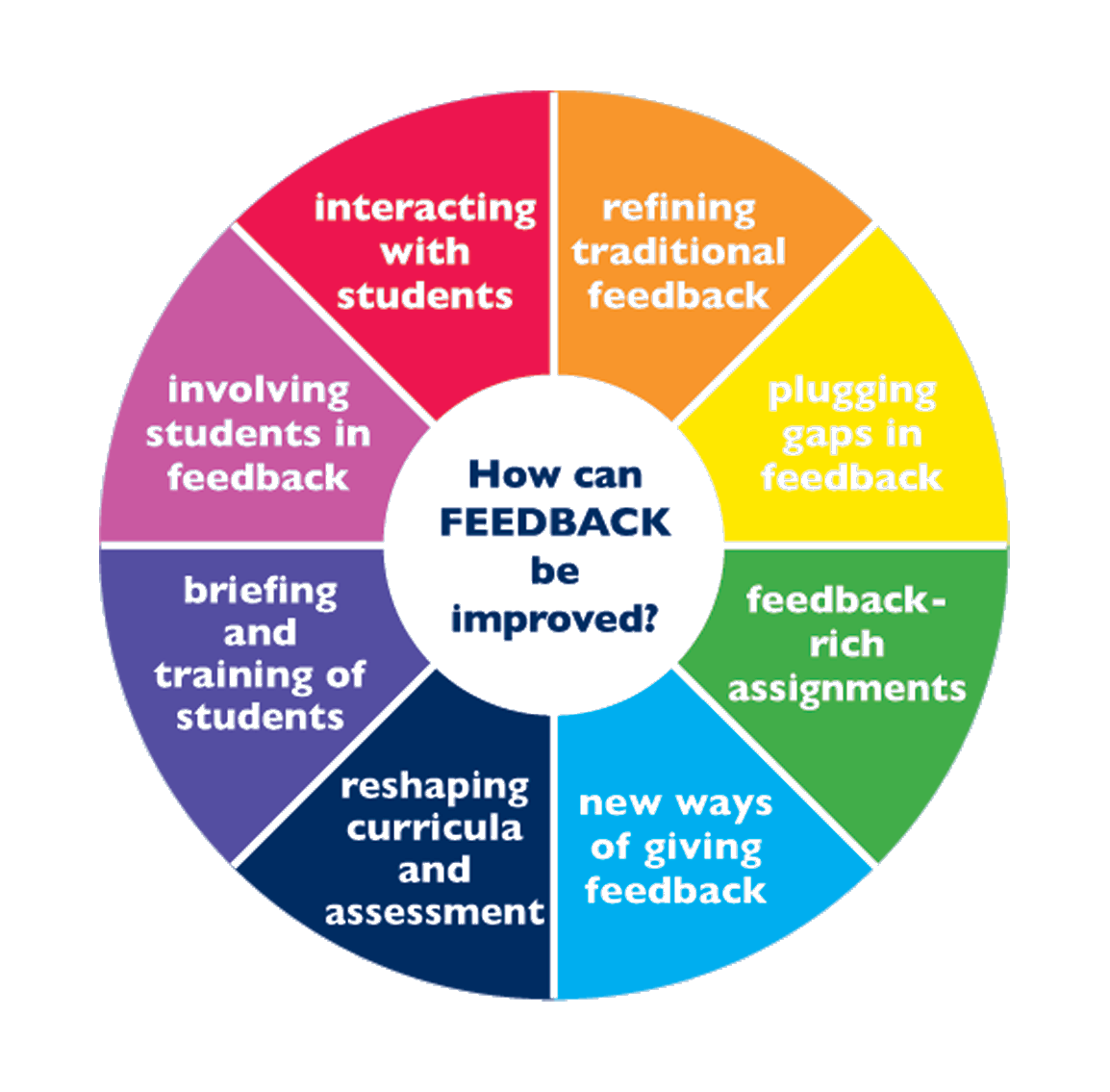
Enhancing Feedback from the University of Edinburgh
And this is why writing conferences can be powerful tools to support developing writers. Not only are student writers better able to descern the tone of the feedback given by a teacher during a face-to-face conference (rather than attempting to interpret the disembodied written comments of the teacher on paper), but the verbal conference allows for the student to maintain control over his work. The teacher is not marking up the student's work. Instead, the act of conferring is a dialogue between writers about rhetorical choices; the act of conferring supports the writer and not simply a single piece of writing. Additionally, because these conferences happen in the presence of other students in the classroom, there is the added benefit of supporting other writers in the room who overhear. Penny Kittle writes in her book Write Beside Them, "Students want to hear what other students are writing about and will listen in, doubling or tripling the value of that writing conference. Writing depends on talk" (86). So it makes sense that using audio recording tools to capture and share these conferring moments can become a powerful tool for providing feedback to student writers.

Co-director of the National Writing Project at Rutgers University, Sara Bauer published an article in 2011 in the English Journal on her experiences using audio comments to provide feedback to her high school writers. In her article "When I Stopped Writing on Their Papers: Accomodating the Needs of Student Writers with Audio Comments," Bauer writes, "...audio feedback enables my comments to become much more developed and targeted to the individual writer than they had been when I confined myself to cryptic and cramped notes written in the margins" (66). Using audio commentary allowed Bauer to more clearly develop her reactions to a student's written work, and in doing so, opened up opportunities for her students to reflect on their rhetorical choices. Bauer's comments were not limited to fixing grammatical or content errors, but instead focused on how she responded to her students' work as an interested reader. What did the writing evoke in her as a reader? What did it make her wonder? Where did her understanding break down? "The practice of making audio comments goes beyond assisting students with revising a particular assignment," Bauer writes. "I was able to target my instruction so that students could learn about themselves as writers and develop strategies for avoiding common pitfalls on future assignments, thereby strengthening their writing performance over the year" (66). However, Bauer used her audio comments in lieu of written feedback. Her comments were not a recording of an actual conferring session with her student writers. In some ways, her audio commentary was still her enacting her authority over the student's work as an instructor handing down directions for improvement.

Although there is a great deal written about the power of conferring with student writers and emerging research about the benefit of using audio comments to provide feedback, as of yet there does not seem to be research on the merging of these two feedback practices. However, there does appear to be an interest in the possibility offered by using digital tools to record student writing conferences. This past week I developed an online survey of writing teachers' attitudes and practices for providing students with feedback on their writing. Using social media and email, I have so far received responses from 22 educators from a diversity of teaching situations. Just over half of the respondants are from the greater Philadelphia area while the remaining hail from the Northeast of the United States to Canada's western coast. Educators from elementary school through collegiate level responded, and nearly all of the respondants voiced an interest in learning better strategies for providing student writers with timely, supportive feedback. Only three of the respondants felt confident in the ways in which they provided their student writers with feedback. Although a majority of the teachers who responded felt that they had more to learn about providing feedback, well over half had used digital tools to provide feedback to their students writers with varying degrees of success. Two of the teachers who responded were already using an audio recording Add-On in Google Drive to leave audio feedback on their students' written work. So there does seem to be an emerging trend of using digital tools to provide feedback and thus opening up possibilities as both teachers and students have the ability to access that feedback anywhere at any time. But the most often made comment was about timing and a wish for more time to work with students individually on their writing. Although this seems disappointing, in fact there is great opportunity here as using digital audio recordings during conferencing sessions may be a way to open up some of that time. Using and sharing audio recordings of conferences with a class of students may help to build a library of feedback which students would be able to access when and where ever they needed it. A digital library of recorded conversations with student writers about their writing process may be a helpful way to think about providing supportive feedback to practicing writers.

In the coming week, I hope to have more teachers complete my survey (hint, hint), and I also am looking to interview a few teachers who are already using audio tools to provide student writers with feedback. My goal is the connect with those teachers that are using digital tools to audio record comments in order to pilot the idea of recording conferencing sessions in addition to trying this approach in my own classroom. And I would love to hear from you!

Tuesday, April 1, 2014

Gone Hunting. Be Back Soon?

I have over researched. It is what I do. I get excited about an idea, and I start hunting for every book, every article, every blog post ever published on the topic. And I am a very good hunter. I have tracked down every mention of “feedback” hiding in the indexes of books that line my shelves. I have retraced my path through the works of familiar writers - Troy Hicks, Donald Graves, Penny Kittle, Kelly Gallagher - and in these footprints, I have found new paths to follow. Unfortunately, I get so caught up in the hunt that I lose track of my starting point. And that is where I find myself today, lost in the woods, hunkered down in tomes on feedback and conferring as I try to suss out where to begin. So let me retrace my steps a bit.

Like so many English teachers, I spend hours writing comments on student writing. Having taught for just over a decade, you would think I would have gotten the hang of managing the paper load of giving student writers feedback. Yet instead getting better, I’ve gotten worse….much, much worse. When I first started out, I could get through a stack of 30 or so papers in a couple of hours. Today, it takes days...okay, weeks. But it is not as dire as I am making it sound. When I first started teaching, I would assign essays. Each student wrote to the same prompt. Each student would turn in nearly the same paper. Each comment I wrote was nearly the same as the last. What were students learning about writing? Nearly nothing. So over the years, I changed how I teach writing. When we write in class now, most of the writing that we do is for a purpose and an audience outside of just me as the teacher. The feedback I give students today is not simply in the form of grammar corrections and a paragraph at the close of the paper they have turned in for a grade. I have learned from the gurus - Penny Kittle, Peter Elbow, Ralph Fletcher - that feedback in form of questions helps my emerging writers reflect on the writing choices they make. And my students are writing and publishing in spaces where others can read and give feedback as well. Technology has changed not only how students receive feedback on their writing, but also when and where they get that feedback. This is what takes time. And unfortunately, I am frustrated in how I am using my time.

Because we use collaborative online writing tools like Google Docs to turn in our written assignments, students know they have access to help when and wherever they need it. Learning and writing are no longer confined to the classroom. The teacher-student relationship is no longer confined to the physical classroom. So as my students are working on a writing piece, it is not unusual for them to message me or shoot me a quick email to ask a question about a sentence or a paragraph idea. And wherever I happen to be, in front of a computer or shopping for groceries, that little ping from my phone alerting me that a student is working on developing their writing makes me smile. I must oblige, and so I send off a quick response, a question to guide their revision. But as you can imagine, the few days before a writing piece is due, those pings multiple becoming a cacophony of unmanageable requests for feedback. I see students engaging deeply in the process of their writing as they request feedback, but those requests are often last minute and many times requesting help editing rather than support for larger revision issues. So, how do I spend less time answering emails at all hours and encourage more meaningful revision and reflection on writing? Let me ask Nancie Atwell and Peter Elbow.

Both Atwell and Elbow point out the dangers of over evaluating student writing. Student writers are empowered when they maintain authorial ownership and autonomy over their writing endeavors. Marking a student’s paper with the dreaded red pen or even using digital tools to heavily comment in the margins of a student’s writing diminishes the control that the student has over his or her own piece. As Elbow points out in “Ranking, Evaluating, and Liking: Sorting Out Three Forms of Judgment,” we condition our students out of reflecting on their rhetorical choices when we over comment. Elbow writes, “constant evaluation by someone in authority makes students reluctant to take the risks that are needed for good learning -- to try out hunches and trust their own judgement.” And this is in part why Peter Elbow and Nancie Atwell among others advocate for teachers to instead engage in verbal conferences with student writers. Conferring with students maintains the student writer’s authorial control over his work and opens greater opportunities for teachers to have conversations with the writer about his rhetorical and content choices. Rather than the one-sided feedback that students get through a teacher’s written comments, writing conferences encourage reflection and support the student’s autonomy. But, conferences take time...lots of time. So, how might we combine the accessibility that the use of digital tools offers with the support that conferencing provides?

Audio recording! Here’s my idea: when I conference with a student writer about her work, I’m going to use the audio recording extension in the Google Drive Add-On menu to record the conversation that we have about a particular writing assignment. That student can then return to her document later and replay our conversation. And, because I have my students turn their work in using shared folders in Google Drive, if that student opens the privacy setting on her piece of writing so that others in class can see it, her peers will be able to also replay the audio file of our conference. Within the shared folder, students can have access to multiple writing conferences. In her book In The Middle, Nancie Atwell writes about the importance conferring with writers, stating that conferences have a greater impact on how student writers learn than any lesson or comment that a teacher could give (17-18). Using shared audio recordings of conferences to give feedback could open up new ways avenues for students to reflect on their writing choices. And there is some emerging research on the power of using audio tools to teach emerging writers.

Jeff Sommers in the recent volume of the Journal of College Literacy and Learning writes about the power of recorded voice responses to student writers, an activity he calls “Response 2.0”. He writes, “Response 2.0 can be fuller, deeper, and broader than written response because most teachers can speak faster than they can write or type, and the technology itself frees audio and video responders from the constraints of space on a printed page of text” (35). Sommers’ review of how university writing professors are using audio and video commentary to give feedback to student writers gives writing teachers from levels ideas for how technology may be able to help our practicing writers reflect and engage more meaningfully with their writing endeavors. His review of previous research and responses from his own student writers helps us to imagine how digital tools may enhance our classroom efforts and offer more supportive feedback.

In my hunt to find support for using digital recordings to give student writers feedback, I have found some promising leads. Now, I need to gather what I have found and make some tracks of my own.  Let’s put this theory into practice!

Tuesday, March 25, 2014

Keeping Elbow Close at Hand

Slice of Life Challenge, Day 25 

Pic from Bernard L. Swartz Comm. Inst.
I first encounted Peter Elbow's work in my undergraduate writing methods course. His writing has served as inspiration both for how I write as well as how I teach writing. Today I had the opportunity to revisit his piece from the College English journal published in 1993, "Ranking, Evaluating, and Liking: Sorting Out Three Forms of Judgement." I've been doing some research on feedback, so it makes sense to return to my mentor, Mr. Elbow.

We are a culture obsessed with feedback. Just take a cursory scan of the books listed in Amazon's search list when you type in "feedback" as a search term. Over 100,000 items pop onto the screen, everything from books on neuropsychological assessment to a children's picture book. And recently, a number of news outlets have been featuring the recent work Harvard's Negotiation Project, a book titled Thanks for the Feedback: The Science and Art of Receiving Feedback Well. So even though Elbow's essay is over twenty years old, feedback is clearly a topic with which we continue to grapple.

Elbow's argument against ranking and grades, so closely linked to the writings of Alfie Kohn, Sir Ken Robinson, and many others, highlights what we have known to be true about student writers for a long time: grades kill writing. As Elbow points out, "Ranking leads students to get so hung up on these oversimple quantitative verdicts that they care more about scores than about learning - more about the grade we put on the paper than about the comment we have written on it." Any teacher of writing knows this. How many times have we complained that when we return their essays, after spending hours making careful comments and questions, students take a cursory look at the grade and toss the paper into the trash. Why is this? Elbow argues in part this happens because we have conditioned our student writers to be concerned with their rank. We have made them grade addicts.

And yet, we know this will not grow their writing skills. Elbow argues that students need thoughtful, evaluative comments that move their thinking forward, but which is mostly free of the ranking that can hinder their growth. I agree. We want our students to become reflective, confident, motivated writers. However, the threat of the red pen, whether in the form of a grade or in the form of over evaluating, can shut down the reflection and risk-taking that we need to encourage in our practicing writers to engage in. Elbow writes that "constant evaluation by someone in authority makes students reluctant to take the risks that are needed for good learning -- to try out hunches and trust their own judgement." We do not want students simply writing for us. What good is that? Elbow states that the worst influence of grading and over-evaluation of our student writers can be seen when students make changes to their writing “for the sake of the grade; not really taking the time to make up their own minds about whether they think my judgments or suggestions really make sense to them."

Instead, student writers grow when given opportunities to write for supportive readers. Students do need opportunities to write for both evaluation and (unfortunately) ranking, but we can lessen the negative impact these practices by carefully considering how to motivate student writers to reflect and revise through careful use of our feedback. As teachers, we need to be their supportive and not just critical readers.  We know this from our own experiences as writers.  I bet that most of us can recall that one teacher (or perhaps a few) who encouraged us to write more, who believed in our writing endeavors.  Elbow highlights this, too: "...the way writers learn to like their writing is by the grace of having a reader or two who likes it -- even though it's not good.  Having at least a few appreciative readers is probably indispensable to getting better." We help our writers grow when we put down the red pen and put on our reading lens. When we respond to our students' writing as invested readers, our feedback helps to support their endeavors. We highlight that connection between writer and audience, between writing and reading. And when we give feedback from this position, we help our emerging writers understand both the purpose and audience for their writing. This is where writing grows -- not in circling grammar mistakes or slashing out redundancies, but in highlighting our connections to the writer and the writing.

Friday, February 21, 2014

I Have It All Wrong...But I Have An Idea To Fix It

Graphic from SHSU
A few days ago, I posted a research idea  to investigate better ways of giving feedback to my student writers using digital tools.  The problem? I was going about it with my research end already in mind. I know from my work with students and from research already done by so many others what I would find: the students who are not as confident in their writing skills do not feel confident giving feedback on their peer's writing.  And the fix that I had in mind was that I would use the features of Google Docs to comment and give more feedback. But this is no different that what I am already doing!  Simply writing more on a student's writing piece is not going to necessarily ensure that they do something with that feedback.  It just makes more work for me as the teacher. I need a better idea for how to help students engage with meaningful revision of their written work.

Aaron Sams at PAECT event, Oct. 2013
Something I heard Aaron Sams talk about when I ate lunch with him at a PAECT event in October has been kicking around in the back of my mind.  A small group of us were discussing how we tackled grading issues when much of our planning time was used to created the resource materials that students use to learn our materials at home.  In the flipped learning approach, students learn from our instructional materials as homework while classtime is used to practice, collaborate, and workshop.  What this looks like in my high school English classroom can be a bit chaotic at times.  The big switch for me came when I asked students to complete their written work in class rather than in isolation at home.  This made a significant difference.  Students work on their writing with me in the classroom acting as their coach, they can ask questions of their peers, and they see models for how writing happens all around them.  But when do you grade all this work?  Aaron Sams' response: "I never take grading home."  WHHHAAAT??!!  Instead, he grades every assignment with the student in the classroom through a one-on-one conference.  Sounds awesome, right?  My first thought was, "Wow, I wish I could do that, but I don't have time enough in class."  After all, I'm and English teacher and Sams is a science teacher.  I just don't have time to conference every essay.

Wait!  Yes I do! So what I hoped to encourage was student engagement with the feedback they received on their written assignments.  Conferencing does this.  How many times on this blog have I mentioned the work of Lucy Calkins and Kelly Gallagher and Troy Hicks and the fantastic work done by all the National Writing Project educators, all of whom have shown again and again how conferencing with student writers not only helps the writer better understand her process and writing choices but also encourages a deeper level of reflection on where revision (not just editing) needs to happen.  And not only that, but conferencing with students while other students are in the room serves as a model for everyone on how we talk and think and support writing.  What would be a better use of our classtime? So I need to make time to conference/grade every essay in class.  And, I have an idea for how to do it.

Photo by Laurie Sullivan
My students are already using Google Docs and shared folders to turn in their essays.  The shared folder makes it easy for us to give feedback on each other's work throughout the drafting process since we can access each other's writing at any time either in school or outside of it. We use the comment feature in Google Docs to give written feedback. And as I handout the grading rubric the day a writing piece is assigned, we use the rubric to guide how we give peer feedback. But when it comes time to grade the essays, traditionally I have written all my feedback out on a printed grading rubric, not on the student's actual document.  Well, I'm going to change that up a bit, and here's how:

Audio recoding app in Google Drive
On the day that students are to turn in a completed writing piece, I'll call them up to the teacher's computer where I can already have the student's essay pulled up on my screen.  I'll have the grading rubric on my desk, and the student and I will use it to go over the writing piece together with the student making notes on the rubric as we discuss her piece.  There's a handy little tool in Chrome called Kaizena (formerly 121Writing).  When you are in Drive, click on "Create" and at the bottom of the options you will see "Connect More Apps."  Use the search box to find and install Kaizena.  What does it do?  It allows a user to record audio while looking at a specific Google document.  So, while the student and I are conferencing and collaborating over the grading rubric, I can record our conversation so that when the student goes back to her seat or goes home, she can access a recording of our conversation about her writing piece any time she wants!

Graphic from SHSU
Of course, there is no way that I will be able to conference with a class of 20-30 students in one 90-minute class period.  It will likely take three class periods.  However, as I'm conferencing, students can be using feedback to revise or make further edits or work on another piece.  Trust me, it took me a lot long than three days to get graded essays back to students using the model that I was working with. And the part that I am most excited about - not only will individual students have the ability to go back and listen to the audio record of our conference, but because their work is shared in a class Google folder, other students in the class could access the conference and learn from it as well.  I leave it up to the individual student on whether or not to leave the privacy setting open so others in the class can see and comment on their work, and surprisingly most leave their documents open for others to comment on. Using this conferencing model, I could end up with four or five essays from each student with audio conferences for each, and at the least that's 80 recorded conferences for students to use as models to improve their own writing.

There is some research being done on the effectiveness of using audio to record feedback for student writers.  Dr. Jeff Sommers at West Chester University has been publishing on this idea for the past couple years. His article in the Journal of College Literacy and Learning titled "Response 2.0: Commentary on Student Writing for the New Millenium" addresses how audio recordings can be a more effective feedback tool for student writers than the traditional written feedback.  So I am encouraged by this new model for grading student writing.

I am interested in how other teachers are using both conferences and digital tools to give student writers feedback.  Have you used audio tools to give your student writers revision suggestion?

Monday, February 17, 2014

Gimmie Feedback

Photo by Avolore
So with a bit of a stutter start due to a freak number of snow days this month, I've gone back to school. Full-time. My sabbatical this semester has me in three graduate courses, one being my required research methods course. Now, I just need to decide what I want to research. In the past, I've done action-research on mastery grading and written some about my interest in engaging student writers with authentic audiences. This time around, I want to spend time thinking about ways to grow stronger writers through feedback.

I’m hoping to conduct my research on student writing and ways in which I can help students better understand their own process of production and engage more deeply in their reflection and revision process. This is a topic that has been written about extensively by many others, and the works of Ralph Fletcher, Kelly Gallagher, Troy Hicks, Penny Kittle, and Nancie Atwell have certainly shaped how I interact with my student writers. However, I want to take some time to focus specifically on what is happening in my classroom, what I’m actually doing to teach and support my emerging writers, and reflect on my teaching strategies and assumptions of how my students learn their writing skills.

Photo by Mortsan
For the last seven or so years, I have almost exclusively taught tenth grade English at a suburban high school just outside of Philadelphia. With about 450 students per grade level at our high school, I usually end up teaching somewhere between 140-170 tenth graders each year, about a third of the grade level. I am generally teaching either honors level or academic level students, though those distinctions are often blurred as our district does not have true levelling system in that students with their parents self-select the level of the course they will take. My classes are diverse in that our district brings together students from a wide socio-economic range, and it is not unusual to have students who come from homes where both parents have advanced degrees and students whose parents did not attend college in the same class. That said, although our cultural diversity is increasing in the district, the majority of students identify as Caucasian, and I would guess that about 80% of my students started in the district as kindergarten students. As such, most of my students have come through a system that focuses on teaching the basic expository paragraph which culminates in writing essays formatted on the five-paragraph style of writing. However, as students get into their sophomore year, that formula for writing breaks down. Content teachers across our high school complain that student writing lacks analysis and critical thinking. So I have spent a great deal of time reflecting on how to teach writing that both encourages students to engage deeply with their content materials as well as reflect on how they are organizing their message.

In my classroom, I have moved away from writing on paper, finding that using online spaces to write, namely blogs and shared Google Docs, allow for greater feedback and for me to act more as a coach during the writing process rather than simply responding to student writing after the final copy has been turned in. I can give feedback as they write. When it is working well, students are not simply writing their own work, but engaged with their peers in a collaborative feedback process. This, however, has been difficult to manage. Generally speaking, the students that enjoy writing, who already write well coming into my classroom, are the same ones that spend the most time engaging with their writing and with the writing of their classmates. The students that need the most support are also those that rarely take time give to feedback to other students. This makes sense. The students comfortable and confident with their writing also feel comfortable helping others. However, the students that need more support, who would benefit from both giving and getting feedback, are those less likely to get it. And as a teacher of about 70 students each semester, I find it difficult to give feedback at multiple points to each student during their drafting process. So even though I know from research that students benefit from feedback during their writing process rather than after they complete it, I struggle to make that happen consistently for all students. This is where I would like to focus my research: How can I use digital tools to provide feedback on student writing that encourages revision and reflection on the writing process? And, how can I get all students involved in that process of feedback as well?

Here's where my research starts - with questions:
  • How do I get all students involved in the process of giving feedback to their peers?
  • Is it helping or hindering the giving of peer feedback that I do not grade peer feedback?
  • What types of feedback do students find most helpful during their writing process?
  • At what point in the writing process do students find feedback most helpful?
  • What inhibits students from giving feedback to their peer’s writing?
  • If my goal with feedback is to get students to go back into their writing to make content revisions and reflect on their writing process, should I grade student interaction with the feedback that I give?
  • How much is access is reliable wireless devices an issue?
  • How might the use of digital tools help the feedback/revision process become more transparent for both the student writer and the teacher?
As a National Writing Project (NWP) fellow, I am invested in students exploring their process of writing. In fact, on the very first day of each semester, the students and I begin by writing a short piece describing a metaphor for our writing process. How do we come up with and then refine our ideas through composition? I clearly approach the teaching of writing from a post-process approach, which means that I share with students, both explicitly and subtly, my understanding of writing as a non-linear process that is public, interpretive, and situated. My understanding of teaching writing influence by this post-process approach as well as by critical theories and is steeped in the writing of Alfie Kohn, Paulo Freire, Grant Wiggins, Allen Webb, and most recently by Troy Hicks, another NWP teacher who has focused his recent work on crafting digital writing with student writers.

And my own writing experiences have shaped how I teach writing. Many of my secondary school teachers and some of my undergraduate professors would share feedback in the form of one or two sentences and a grade at the end of my essays, which did little to encourage reflection on my own writing process. Yet, I was always writing, both for school and for pleasure. It really wasn't until I attend a small liberal arts college for my Masters in Liberal Arts that I began to reflect on how writing happens. My graduate professors gave extensive feedback not on my grammar or sentence construction, but on the content of my writing, talking back with me about how I constructed my ideas and rationales. And, our writing assignments were many times for larger audiences. We were sharing our essays with the other students in class, and many times we were submitting out for publication as well. It was in this program that I learned HTML code, not because I took a course but because I needed to create a website to share a few of my essays for a course on American women writers. And it was this experience of writing for a real audience that changed how I thought about my own writing and about teaching writing. When I started receiving emails from people who were reading my work online, I went back and made deliberate revisions (I even noticed this past week that one of my pieces was referenced in a book). And, I also sought out more opportunities to publish. I've been fortunate to have a couple of my poems published, my essay for This I Believe published, and of course I blog. So in teaching writing, I have sought many opportunities for students to write for larger audiences, not just for me as their teacher.

Photo from Flickr Creative Commons
Technology has made this increasingly easy to do. My students blog, submit for publication through websites and emails, and create their own web pages. And this has had an impact on what they select to write about and share. However, many students still seem to view the writing that they do for school as school writing, meaning it is only important insofar as the grade they receive. I don’t know if this is because students are used to using digital tools (Google Docs, blogs, etc.) to share their work and so the unique sense of an audience has disappeared for them or if perhaps they are so disempowered by the types of circumscribed writing that they have been asked to do that by the time I get them as tenth graders they don’t see the relevance of the writing we are doing. Maybe a combination of the two. But whatever the reason, my students do not seem to engage in reflection and revision as deeply as I would like to see them do.

So this is where my research into using digital tools to provide feedback to student writers begins. I hope to share with other teachers how using digital tools to give feedback makes the writing process more transparent for the students and the teacher and can grow student investment in building their writing skills. To this, my goal is not just interview my students, but students from a variety of schools and settings about how they engage with feedback on their writing. If you are interested in helping (or know someone who might be), reach out! I'd love to make new connections!

Related Posts: